For a change (from poetry), a very short story. English followed by une version en français y una versión en español.
Beginning to play again
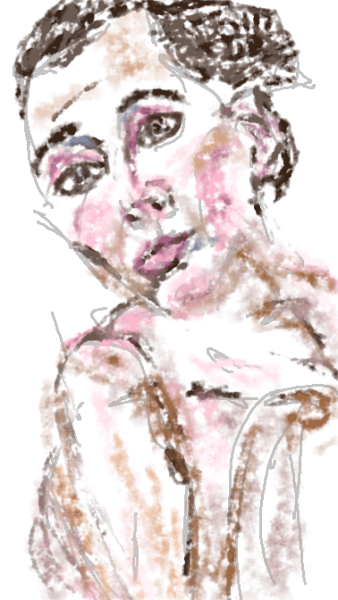 She moved a pawn to king 3. And he responded with pawn to queen 4.
She wasn’t sure what to play next. Perhaps the bishop could glide out alone ? That could make the piece vulnerable, but how vulnerable could a piece be so early in a game? Especially since his opponent apparently hadn’t played for a long time. And he was saying that he always played badly, and this in part because he never gave enough thought to what his opponent was trying to do.
What was she trying to do? Could she say she wasn’t sure? Could she say she used to enjoy playing with another man, who she did not think this new one could replace? Had it been her choice the other would have remained, would still be playing with her. Or would most people say “against her”?
Had this new man been the one to propose the game? She wasn’t sure of that either. He was advancing another pawn, saying he’d read that the center was all important. “Only one of us is going to end up well centered,” he said with a laugh.
Could it be important, too, not to let your opponent know what your strategy was? Or that you had little interest in winning?
She moved her bishop back a little, and he smiled to see she was challenging, or half challenging, him. Or trying to be a little better centered?
One of the many things he’d already said: he and his son had liked to roughhouse. To him, a father roughhousing with his son, and pretending to fight hard—this was important. Like the center? Many things, even knowing how to pretend, seemed important to him. Could he and she be too much alike?
He moved one of his knights.
The last man had been very attached to winning, and he quickly forgot that chess, or anything else, could be just a game. Was that been why she admired him? Felt safe and free—protected and free?—with him?
The new man was suggesting she could try a knight too. And she could, she would, for him. He wanted to play with her and for her to want to be playing with him.
The last man had just wanted her nearby to watch his winning. That this involved her losing was not something he ever seemed to notice.
This new man wanted to be pleased with her. As if, after having been left by a man you loved—who you thought you loved? thought he loved you in his own way?… What about you could be pleasing?
But there this new man was, bringing out his queen, where she might be taken, where she could be seen in all her vulnerability.
Was this her future?
She would castle and wait, half curious, half afraid.
Français
Jouant, de nouveau
Elle a déplacé un pion au roi 3. Et il a répondu par un pion à la reine 4.
Et maintenant quoi faire ! Le fou – la folle – pourrait-il/le avancer tout seul ? Cela pourrait rendre la pièce vulnérable, mais à quel point pourrait-elle l’être si tôt dans un jeu ? D’autant plus qu’apparemment son adversaire n’avait pas joué depuis longtemps. Et il disait qu’il jouait toujours mal, en partie parce qu’il ne se préoccupait jamais assez de ce que son adversaire essayait de faire.
Qu’est-ce qu’elle essayait de faire ? Pourrait-elle dire qu’elle n’en est pas sûre ? Pouvait-elle dire qu’elle aimait jouer avec un autre homme et qu’elle ne pensait pas que ce nouvel homme pourrait le remplacer ? Et si elle avait eu le choix, l’autre serait resté, aurait continué à jouer avec elle. Ou la plupart des gens diraient-ils • « contre elle » ?
Ce nouvel homme, avait-il été celui qui avait proposé le jeu ? Elle n’en est pas sûre de cela non plus. Il avançait un autre pion, disant qu’il avait lu que le centre était important. « Seul l’un d’entre nous finira par être bien centré », dit-il en rit.
Serait-il également important de ne pas laisser votre adversaire connaître votre stratégie ? Ou que vous n’avez que peu d’intérêt à gagner ?
Elle recula un peu son fou, et il sourit en voyant qu’elle le défiait, ou le défiait à moitié. Ou essayait-elle—pour lui—d’être mieux centrée ?
L’une des nombreuses choses qu’il avait déjà dites : son fils et lui aimaient lutter corps à corps. Pour lui, un père qui se bagarre avec son fils et qui fait semblant de se battre avec acharnement, c’est important. Comme le centre ? Beaucoup de choses, même de savoir faire semblant, lui semblaient importantes. Pouvait-il y avoir trop de ressemblances entre lui et elle ?
Il fit sortir l’un de ses chevaliers.
Le dernier homme était très attaché à la victoire, et il a rapidement oublié que les échecs, ou autre chose, pouvaient n’être qu’un jeu. Est-ce pour cela qu’elle l’avait admiré ? Elle s’était sentie en sécurité et libre – protégée et libre ? – avec lui ?
Le nouvel homme suggérait qu’elle pourrait aussi essayer un chevalier. Et elle le pourrait, elle le ferait, pour lui. Il voulait jouer avec elle et qu’elle veuille jouer avec lui.
Le dernier homme avait juste voulu qu’elle soit à proximité pour assister à sa victoire. Le fait qu’elle ait perdu n’était pas quelque chose qu’il semblait remarquer.
Le nouveau voulait qu’elle soit contente. Comme si, après avoir été quittée par un homme que vous aimiez – que vous pensiez aimer ? et vous pensiez qu’il vous aimait à sa façon ? Maintenant vous allez vous amuser ?
Et voilà que ce nouvel homme sortait sa reine, là où elle pouvait être prise, là où elle pouvait être vue dans toute sa vulnérabilité.
Était-ce là son avenir ?
Elle faisait un roque et attendait, mi-curieuse, mi-effrayée.
Español
Empezando a jugar de nuevo
Ella movió un peón a rey 3. Y él respondió con peón a dama 4.
Ella no estaba segura de qué jugar a continuación. ¿Tal vez el alfil podría deslizarse solo? Esto podría hacer vulnerable a la pieza, pero ¿cómo de vulnerable podría ser una pieza tan pronto en una partida? Sobre todo porque, al parecer, su oponente llevaba mucho tiempo sin jugar. Y decía que siempre jugaba mal, y esto es en parte, dijo, porque nunca pensaba lo suficiente en lo que intentaba hacer su oponente.
¿Qué intentaba hacer ella? ¿Podría decir que no estaba segura? ¿Podría decir que solía disfrutar jugando con otro hombre, al que no creía que este nuevo pudiera sustituir? Y si hubiera sido su elección, el otro se habría quedado, seguiría jugando con ella. ¿O la mayoría diría “contra ella”?
¿Había sido este nuevo hombre el que le había propuesto el juego? Tampoco estaba segura. Él estaba avanzando otro peón, diciendo que había leído que el centro era lo más importante. “Sólo uno de nosotros va a acabar bien centrado”, dijo con una risa.
¿Podría ser importante, también, no dejar que tu oponente supiera cuál era tu estrategia? ¿O que tenías poco interés en ganar?
Ella movió su alfil un poco hacia atrás, y él sonrió al ver que estaba comprometiéndose con él. ¿O que intentaba centrarse un poco más?
Una de las muchas cosas que él ya había dicho: a él y a su hijo les había gustado pelearse. Para él, que un padre se peleara con su hijo y fingiera luchar duro era importante. ¿Como el centro? Muchas cosas, incluso saber fingir, le parecían importantes. ¿Podrían él y ella parecerse demasiado?
Saco a uno de sus caballos.
El último hombre había estado muy apegado a ganar, y olvidó rápidamente que el ajedrez, u otras cosas, podían ser sólo un juego. ¿Había sido por eso por lo que le había admirado? ¿Se sentía segura y libre -o protegida y libre- con él?
El hombre nuevo le estaba sugiriendo que ella también podría probar con un caballo. Y podría, lo haría, por él. Él quería jugar con ella y que ella quisiera jugar con él.
El último hombre sólo quería tenerla cerca para ver cómo él ganaba. Que esto implicara que ella perdiera no era algo en lo que él pareciera fijarse.
Este nuevo hombre quería complacerse con ella. Como si, después de haber sido abandonada por un hombre al que amabas… ¿al que creías amar?… ¿al que creías que te amaba a su manera?… ¿Qué hay en ti que pueda ser tan agradable?
Pero allí estaba este nuevo hombre, sacando a su reina, donde podría ser llevada, donde podría ser vista en toda su vulnerabilidad.
¿Era este su futuro?
Se enrocaría y esperaría, mitad curiosa, mitad temerosa.
— Story (or stories) and art work by William Eaton.
 montaigbakhtinian