English followed by une version en français y una versión en español.
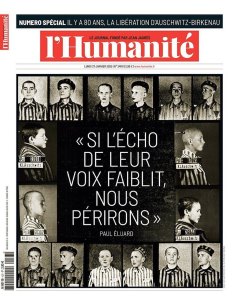 Before saying a few words about the short poem presented in three versions below, I note my great concern regarding a certain wealthy man making a Nazi salute at the United States presidential inauguration last week. And I am doubly concerned to have learned subsequently that the Anti-Defamation League (ADL) in the US was trying to downplay this matter. As the German weekly Die Zeit wrote in an editorial: Ein Hitlergruß ist ein Hitlergruß ist ein Hitlergruß (A Hitler salute is a Hitler salute is a Hitler salute). (Cf. Katrin Bennhold, What Elon Musk’s Salute Was All About, New York Times, 24 January 2025.)
One of my responses, which I would urge on Montaigbakhtinian readers, was to report the incident to the ADL. That organization, among others, needs to wake up soon! The response heretofore is frighteningly reminiscent of how some Jewish leaders in Germany responded to the rise of the Nazis and their early anti-Semitic measures.
As regards the poem, long, long ago I was introduced to this way of creating a poem: you write down 20 words that happen to come to mind, eliminate 5 from that list, and the other 15, in one way or another, make up your poem.
In the present case, I choose one word from each paragraph of an advice-riddled Guardian article: 11 surprising habits that can ruin friendships (10 Jan 2025). The first Spanish draft pushed me away from single words toward phrases, and this involved adding words that did not appear in the original article (or in quick, DeepL translations).
As for the article, I liked the suggestion that giving advice or trying to rescue your friends from their problems can be a non-starter. They may feel judged and pressured, and you may feel frustrated or powerless. When “friends are struggling, they often need an ally and a sounding board, not an opinion.”
On the other hand, I was struck by this all-too-advice-column quotation from an “expert”: “At the heart of every healthy relationship is the ability to show up fully as ourselves.”
Kant apparently once proposed that were we to show up fully as ourselves—or to say and write all we thought—it would become clear there was nothing more horrible than human beings. (A certain wealthy man included!) More mildly: show me the relationship in which the participants are able to show up fully as themselves, and . . . I’ve got a bridge to sell you.
Expression américaine dont l’origine remonte à un escroc qui, à l’aide de faux bureaux de vente et de documents falsifiés, vendait des points de repère de la ville de New York à des personnes peu méfiantes. La légende veut qu’à un moment donné, il vendait le pont de Brooklyn deux fois par semaine.
Frase estadounidense que tiene su origen en un estafador que, con oficinas de venta falsas y documentos falsificados, vendía monumentos de Nueva York a los incautos. Cuenta la leyenda que en un momento dado vendía el puente de Brooklyn dos veces por semana.
English
Experts say you might be doing your friendships more harm than you realize
You can be too reserved, too forthcoming
Too loose-lipped or intense
Your jokes too flaky, in poor taste
Extend yourself, join in
Navigate the gifts, the power, the friction
Flee
Français
Les experts affirment que vous faites plus de mal à vos amis que vous ne vous en rendez compte
Vous pouvez être trop réservé et/ou trop franche
Trop exigeante, lâche
Vos plaisanteries, plutôt gênantes
Déployez vos ailes, rejoignez
Naviguez entre les cadeaux, le pouvoir et toutes les frictions
Fuyez
Español
Los expertos dicen que puedes estar perjudicando a tus amistades más de lo que crees
Puedes ser demasiado reservado y/o comunicativa
Exigente, floja
Tus chistes bastante penosos
Despliega tus alas, únete
Navega los regalos, el poder, la fricción
Huye
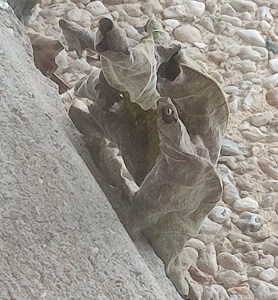
— Poem(s) and artwork by William Eaton. Un merci à Marine Rosset, conseillère municipale socialiste de mon 5e arrondissement, Paris, pour avoir attiré mon attention sur la couverture de l’Humanité, publiée à l’occasion du quatre-vingtième anniversaire de la libération d’Auschwitz-Birkenau (27 janvier 1945).

 montaigbakhtinian