English followed by une version en français y una versión en español. There is also a Notes section in English.
Delaying but hardly deflecting this avalanche, I will say again, and as devilishly as before, that poetry—oh, not the epigrammatic, keep-your-chin-up sort of thing one sees too much of today, but more ambitious poetry—involves repetition with variation, which calls attention to our patterns, however fleeting and faint. We might speak in this regard, as in many another, of the medium, or the form, being the underlying message. We try to find bits of order in a God-less universe in which human beings can be vicious (and whiny), and we are human too?
As regards form, there are similarities between the present poem(s) and 5 March 2019, about 11 am.
How does a person come to be paranoid?
A last hypothesis which I’ve decided to put first:
Paranoia might begin in a fear of oneself.
One gets to know of what a human being is capable –
Taking from others without asking permission, or badmouthing, or . . .
(If to you other people don’t count for that much,
You for them neither?)
But of course – hoping thereby to improve your status or self-esteem? – you would never say anything unpleasant about anyone else.
And though, yes, you have wanted various services from your friends and lovers, you’ve never quite said that, should they prove unable to provide,
The deal’s off.
And there must be some who keep no records of the micro-disappointments, the micro-deceptions.
A doctor wrote a book about his career: One Life for So Many Others – for his patients, instead of for himself.
He went on the radio to promote his book, and so had no time to see me.
But this was to be a poem about paranoia!
A dwelling on one of my questions:
How does a person come to be paranoid?
(Is there a scientist to say it’s genetic?)
I have read that paranoia is a “self-cure for insignificance,” a way of feeling at the very center
Of a God-less, heartless…
Imagine – now rebeginning nearer the center? –
Imagine people can see – or is it
They cannot help taking advantage of other people?
And you have a special vulnerability – or a generosity or a helplessness?
Or is it simply that they are human beings?
(And so is you.)
But how could a person become so vulnerable?
One thought, after having made it to 68, and
After becoming a parent myself, and two broken marriages, and, and . . . :
Can it be the people closest to us who we come to
Fear the most?
(And not for nothing?)
Suppose you mistook your parents for the caregivers
They, at times, enjoyed being and enjoyed imagining themselves to be.
But most of the time they had other worries, ambitions, hobbies, lovers.
How could you get in the habit of imagining that people in positions of authority were going to help you?
(Did you not read how Meleager’s mother killed him, after he killed her brothers?
Or Medea, Agamemnon… Oedipus’s father putting him out on the mountainside.)
Just because you’re paranoid doesn’t mean there aren’t people out to get you?
An inaccurate expression.
People are out to get what they want (or what they think they want).
Inevitably, at times, you’re in the way.
How can there be people who don’t take this to heart?
(Or is it buried somewhere in every heart?)
Es ken zeyen a brkh – It may be a blessing to expect little of other people, and so to be more often pleasantly surprised.
Others have written of the triumph of hope over experience.
Faith, a Christian said, involves being certain of the impossible.
But I have two hours to kill and find on a library shelf Eduardo Galleano’s Las venas abiertas de América Latina, with its descriptions of the brutal exploitation of indigenous people and Africans by Western European and American businesses – Christians desperate to get gold, sugar cane, . . .
As cheaply as possible, human lives be damned.
(And then the International Monetary Fund, the World Bank and other agents of capital arrive to prolong the exploitation, and one of my book clubs has me reading Adam Hochshild’s American Midnight, which recalls how American businesses, police, vigilantes used the excuse of the First World War to brutally suppress or eliminate people who were trying to improve the lot of the poor and working classes.)
Homo homini lupus: we’re wolves.
Mothers on vacation, for God’s sake, fight to get the best seats next to the swimming pool.
Software companies keep imposing essential upgrades that are essential only so that the companies can better track our every movement and sell us new products, and
Even poets
(If we don’t do something to
Stop them?)
Notes
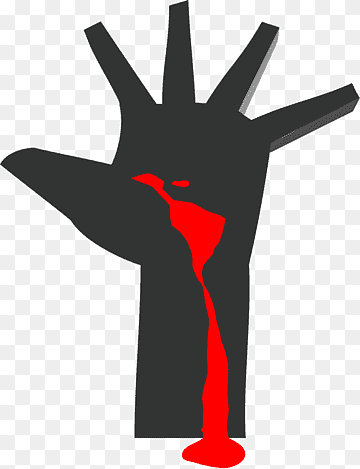
- Uruguayan journalist, writer and poet Eduardo Galleano’s 1971 Las venas abiertas de América Latina (Open Veins of Latin America: Five Centuries of the Pillage of a Continent) describes the nature and the effects on the region of European and later United States economic exploitation and political dominance. (The image at right is a graphic rendering of the Mão of Oscar Niemeyer, which represents the “open veins of Latin America,” in the Latin American Memorial in São Paulo, Brazil.)
- As I noted in the appendix to an earlier poem (We floss, Lord), during the German Occupation of France, between 1940 and 1944, hundreds of thousands of letters were sent to the police or to the Gestapo denouncing residents of France as Jews or communists or De Gaulle supporters—enemies of the state of one kind or another. According to the French historian Lauent Joly (La délation dans la France des années noires, Editions Perrin, 2012), in most every case the motivation for the letter was personal rather than political. Simply put, people were attacking neighbors, competitors, spouses—people they didn’t like or who had something they coveted.
- Excerpts from a blurb for Adam Hochshild’s American Midnight: The Great War, a Violent Peace, and Democracy’s Forgotten Crisis:
Mobs burned Black churches to the ground. Courts threw thousands of people into prison for opinions they voiced. Newspapers and magazines were banned from the mail and forced to close. This was America during and after the Great War: an era blighted by lynchings, censorship, and the sadistic, sometimes fatal abuse of conscientious objectors in military prisons—a time whose toxic currents of racism, nativism, red-baiting, and contempt for the rule of law then flowed directly through the intervening decades to poison our own.
- In a few places this paranoia poem touches on what the French call “complotisme”—a belief in conspiracy, and this in lieu of God. Myself, I am not a complotiste, but my understanding is that this more or less disorganized “religion” endorses a feeling that dark, malevolent forces are ever lurking and ever trying—not unlike software companies?—to feed us untruths, impinge on our liberty and autonomy, vaccinate us against our will, etc.
- Es ken zeyen a brkh is, I hope, Yiddish for “it may be a blessing.” Mit hilf fun di internet mir shraybn a plats fun narish zakhn? (With help from the Internet we write a lot of stupid things?) And any Yiddish expert who may wish to correct me is more than welcome! (And this notwithstanding whether Netanyahu knew in advance of Hamas’s coming invasion, or if Hamas was spurred on by Iran, anxious to sabotage Saudi Arabia’s increasing cooperation with Israel.)
- The parenthetical remark about paranoia being a “self-cure for insignificance,” etc., is drawn from the psychoanalyst and essayist Adam Phillips, Hauteur (‘Paranoid Modernism’), London Review of Books, 2003.
- “The triumph of hope over experience” is a remark, on second marriages, attributed to Samuel Johnson by James Boswell, The Life of Samuel Johnson, LL.D. (1791). I also quoted this remark in Napoleon gardened naked.
- Faith involves being certain of the impossible—this brings me back, and for the umpteenth time, to the second century and Tertullian, De Carne Christi: The Son of God buried rose again: it is certain, because impossible. (« et mortuus est Dei Filius, . . . et sepultus resurrexit, certum est, quia impossibile »)
- In Bruchstücke einer Hysterie-Analyse (Fragments of an Analysis of a Case of Hysteria), Freud proposes that it’s usually not external events we can’t get over.
Eine Reihe von Vorwürfen gegen andere Personen läßt eine Reihe von Selbstvorwürfen des gleichen Inhalts vermuten. (A string of accusastions against others leads one to suspect a series of self-accusations with the same content.)
And—here’s another of the many things that can provoke my paranoia—Freud also writes:
Wer Augen hat zu sehen und Ohren zu hören, überzeugt sich, daß die Sterblichen kein Geheimnis verbergen können. (Whoever has eyes to see and ears to hear will be convinced that the secrets of mortals cannot be kept hidden.)
- The poem having concluded with a joke, can this note section too? I mean, of course a writer’s going to be paranoid when every October he finds out that someone else has been given the Nobel Prize! That said, congratulations to Jon Fosse, this year’s winner.
Français
Comment une personne en vient-elle à être paranoïaque ?
Une dernière hypothèse que j’ai décidé de mettre en avant :
La paranoïa peut commencer par une peur de soi.
On apprend à connaître ce dont un être humain est capable –
Prendre aux autres sans leur demander la permission, ou dire du mal, ou…
(Si pour vous les autres ne comptent pas beaucoup,
Vous ne comptez pas pour eux non plus ?)
Mais, bien sûr, vous – dans l’espoir d’améliorer votre statut ou votre amour-propre? – vous ne diriez jamais rien de désagréable sur une autre personne.
Et bien que vous ayez demandé divers services à vos amis et à vos amants, vous n’allez jamais les dire que, s’ils s’avéraient incapables de les fournir,
Le deal serait annulé.
Et il doit y en avoir qui ne gardent aucune trace des micro-déceptions.
Un médecin a écrit un livre : Une vie donnée aux autres – pour ses patients, plutôt que pour lui.
Il est passé à la radio pour promouvoir son livre et n’a donc pas eu le temps de me voir.
Mais j’ai voulu faire un poème sur la paranoïa !
M’attarder sur l’une de mes questions :
Comment une personne en vient-elle à être paranoïaque ?
(Y a-t-il un scientifique pour dire que c’est génétique ?)
J’ai lu que la paranoïa est une auto-cure pour l’insignifiance, une façon de se sentir au centre
D’un monde sans Dieu, sans cœur…
Imaginez – nous recommençons plus près du centre ? –
Les gens peuvent voir – ou est-ce qu’
Ils ne peuvent pas s’empêcher de profiter pleinement des autres ?
Et vous avez une vulnérabilité particulière – ou est-ce que c’est une générosité ou une impuissance ?
Ou est-ce simplement qu’ils sont des êtres humains, et que
Vous en êtes un aussi ?
Mais encore, comment une personne peut-elle devenir aussi vulnérable ?
Une réflexion après avoir presque atteint les 70 ans, et
Après être devenu parent moi-même, et deux mariages brisés, et, et…
Se peut-il que nous finissions par craindre le plus
Les personnes les plus proches de nous ?
(Et pas pour rien ?)
Supposons que vous preniez vos parents pour des aidants.
Parfois, ils aimaient jouer ce rôle, à s’imaginer ainsi ;
Mais la plupart du temps, ils avaient d’autres soucis, ambitions, loisirs, amants.
Comment avez-vous pu prendre l’habitude d’imaginer que les personnes en position d’autorité allaient vous aider ?
(N’avez-vous pas lu comment la mère de Méléagre l’a tué, après qu’il ait tué ses frères ?
Ou Médée, Agamemnon… Le père d’Œdipe l’abandonnant sur les rochers.)
Ce n’est pas parce que vous êtes paranoïaque qu’il n’y a pas de gens qui veulent votre peau ?
L’expression est inexacte.
Les gens cherchent à obtenir ce qu’ils veulent (ou ce qu’ils pensent vouloir).
Inévitablement, à certains moments, vous êtes dans le chemin.
Comment se fait-il qu’il y ait des gens qui ne prennent pas cela à cœur ?
(Ou est-elle enfouie quelque part dans tous les cœurs ?)
Es ken zeyen a brkh – Cela pourrait être le signe d’une sorte de grâce : d’attendre peu des autres, et d’être ainsi plus souvent agréablement surpris.
D’autres ont écrit sur le triomphe de l’espoir sur l’expérience.
La foi, disait un chrétien, consiste à être certain de l’impossible.
Mais j’ai deux heures à tuer et trouve sur une étagère d’une bibliothèque Las venas abiertas de América Latina d’Eduardo Galleano, avec ses descriptions de l’exploitation brutale des peuples indigènes et des Africains par des entreprises d’Europe occidentale et d’Amérique : des Chrétiens désespérés d’obtenir de l’or, de la canne à sucre…
Le moins cher possible, au diable les vies humaines.
(Et puis le Fonds monétaire international, la Banque mondiale et d’autres agents du capital arrivent pour prolonger l’exploitation, et l’un de mes clubs de lecture me fait lire American Midnight d’Adam Hochshild, qui rappelle comment les entreprises, la police et les miliciens américains ont utilisé l’excuse de la Première Guerre mondiale pour réprimer brutalement ou pour éliminer les personnes qui tentaient d’améliorer le sort des pauvres et des classes laborieuses.)
Homo homini lupus : nous sommes des loups.
Les mères en vacances, pour l’amour du ciel, se battent pour obtenir les meilleures places près de la piscine.
Les sociétés de logiciels ne cessent d’imposer des mises à jour indispensables qui ne le sont que pour mieux suivre nous moindres mouvements et nous vendre de nouveaux produits.
Et même les poètes
(Si nous ne faisons rien pour
Les arrêter ?)
Español
¿Cómo llega una persona a ser paranoica?
Una última hipótesis que he decidido poner en primer lugar:
la paranoia podría comenzar en un miedo de uno mismo.
Uno llega a saber de lo que es capaz un ser humano
-tomar de otros sin pedir permiso, o hablar mal, o…
(Si para ti los demás no cuentan mucho,
¿tú para ellos tampoco?)
Pero, por supuesto – ¿esperando así mejorar tu estatus o su autoestima? – nunca dirías nada desagradable de otra persona.
Y aunque, sí, has querido varios servicios de tus amigos y amantes, nunca les has dicho que, en caso de que se muestren incapaces de proporcionártelos,
se acabó el negocio.
Y tiene que haber algunos que no lleven ningún registro de las microdecepciones, de los microengaños.
El médico que escribió un libro sobre su carrera: Una vida donada a los demás –a sus pacientes, en lugar de vivir para sí mismo.
Salió en la radio para promocionar su libro, así que no tuvo tiempo de verme.
Pero ¡éste iba a ser un poema sobre la paranoia!
una oportunidad para detenerme en una de mis preguntas:
¿Cómo llega una persona a ser paranoica?
(¿Hay un científico para decir que es genético?)
He leído que la paranoia es una auto-cura para la insignificancia, una manera de sentirse en el centro mismo
de un mundo sin Dios, sin corazón,…
¿Imaginas – ¿ahora recomenzamos más cerca del centro?
Supón que la gente puede ver – ¿O es que
no pueden evitar aprovecharse de los demás?
¿O tenías una vulnerabilidad particular –o una generosidad o una impotencia?
¿O es simplemente que son seres humanos?
(Y tú también.)
Pero, ¿cómo puede una persona volverse tan vulnerable?
Una reflexión tras haber cumplido 68 años, y
después de ser yo mismo padre, y dos matrimonios rotos, y, y…
¿Es posible que acabemos temiendo más
a las personas más cercanas a nosotros?
(¿Y no por nada?)
Supongamos que confundes a tus padres con cuidadores.
A veces disfrutaban siendo cuidadores y les gustaba imaginarse que lo eran.
Pero la mayor parte del tiempo tenían otras preocupaciones, ambiciones, aficiones, amantes.
¿Cómo pudiste adquirir el hábito de imaginar que las personas con autoridad iban a ayudarte?
(¿No leíste cómo la madre de Meleagro lo mató, después de que él matara a sus hermanos?
O Medea, Agamenón… El padre de Edipo echándolo a la ladera de la montaña.)
¿Sólo porque seas paranoico no significa que no haya gente que vaya por ti?
Una expresión inexacta.
La gente va a por lo que quiere (o lo que cree que quiere).
Inevitablemente, a veces, estas en el camino.
¿Cómo puede haber gente que no se tome esto a pecho?
(¿O está enterrada en algún lugar de cada corazón?)
Es ken zeyen a brkh: Puede ser una bendición esperar poco de los demás, y así ser más a menudo agradable sorpresa.
Otros han escrito sobre el triunfo de la esperanza sobre la experiencia.
La fe, decía un cristiano, implica estar seguro de lo imposible.
Pero tengo dos horas libres y encuentro en una estantería de una biblioteca Las venas abiertas de América Latina, de Eduardo Galleano, con sus descripciones de la brutal explotación de indígenas y africanos por parte de empresas occidentales europeas y americanas –Cristianos ávidas por conseguir oro, caña de azúcar…
Lo más barato posible, al diablo con las vidas humanas.
(Y luego llegan el Fondo Monetario Internacional, el Banco Mundial y otros agentes del capital para prolongar la explotación, y uno de mis clubes de lectura me tiene leyendo American Midnight, de Adam Hochshild, que recuerda cómo las empresas, la policía y los vigilantes estadounidenses utilizaron la excusa de la Primera Guerra Mundial para reprimir brutalmente o eliminar a las personas que intentaban mejorar la suerte de los pobres y las clases trabajadoras.)
Homo homini lupus: somos lobos.
Las madres en vacaciones, por Dios santo, se pelean por conseguir los mejores asientos junto a la piscina.
Las empresas de software no dejan de imponer actualizaciones esenciales que sólo lo son para poder seguir mejor todos nuestros movimientos y vendernos nuevos productos.
E incluso poetas
(si no hacemos algo
para detenerlos?)
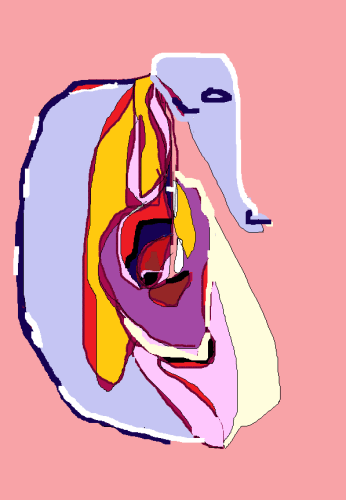
— Poem(s) and computer-aided drawings by William Eaton. Having recently expressed some opposition to high-tech art (let’s call it), and then seeing some high-tech work a colleague had done, . . . Well—surprise, surprise—it occurred to me that such an approach might have something to offer, at least to my semi-abstract work—my “peeps” or “my people,” as I call them. So the other night I experimented, drawing with my mouse and with the relatively primitive program I found already installed on my computer.
 montaigbakhtinian