English followed by une version en français y una versión en español.
An odd poem, or set of poems, because, their jocosity notwithstanding, they emerged in the midst of one of a series of heat waves in France this summer and after I had read some pages of the English naturalist Marianne Taylor’s The Story of Life in 10 ½ Species. In a quiet way and though its goal is simply to teach some science, this Story makes for a rather pessimistic book.
Taylor does not put in bold that we’re destroying our environment, decimating other species, though she does give several telling examples of this. She does not broadcast with big letters that WE’D BETTER MEND OUR WAYS BEFORE IT’S TOO LATE. She assumes that it is already too late, and that if we do not find artificial means of replacing species we’ve killed off—pollinators in particular—or else find another habitable planet we can move to, it’s over for homo sapiens sapiens.
Along the way she speculates on the life that may inhabit the Earth in the future, after humanity has disappeared, and she remarks that although our species has learned to measure the costs of our enormous impact on the planet, other species and ourselves, we seem to have not been able to take advantage of this information. The matter is considered somewhat differently in the New Testament, wherein Paul writes of people who are “ever learning, and never able to come to knowledge of the truth.” Plato’s Socrates may be said to have shared this view, but more enthusiastically: the greatest pleasure and the worthiest endeavor is to try to know despite the inevitability of our not being able to.
Subsequent to repeatedly cooling myself off in the Atlantic and reading in Taylor’s book, and while the poems were still taking shape, I chatted with two Australian tourists in a hotel restaurant, and we came up with another possible solution to the current environmental crisis: a plague on the order of the Black Death, dramatically reducing the global human population.
With all this in mind, should we say that the emergence of this set of poems was miraculous? Or . . . ?
English
They took to the water
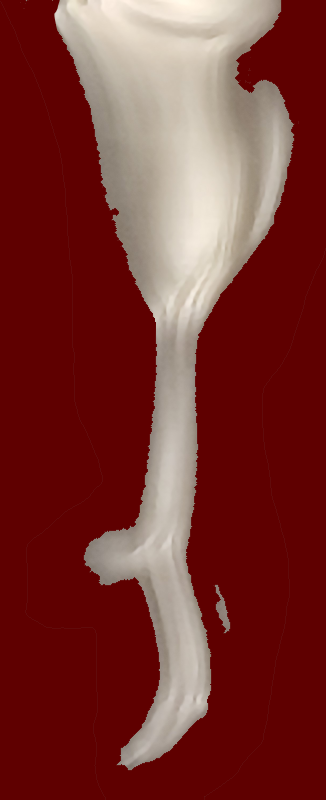
They took to the water
There was nothing else to do
Many had to take up swimming
Which few wanted to do
Their skin it needed thickening
Which took a long time too
And predators of course there were
Not always just a few
They forgot how they used to live
New habits seemed less new
They’d taken to the water
It was all that they could do
Français
Ils se sont mis à l’eau
Ils se sont mis à l’eau
Il n’y avait pas d’autre issue
Beaucoup devait se mettre à nager
Il n’y avait que peu qui ait voulu
Leur peau devait s’épaissir
Qui prenait un temps fou
Et des prédateurs, ne parlons pas
Ni de ceux qui sont morts mordus
Ils oubliaient comment ils vivaient
Pour changer, ils ont dû
Ils se sont mis à l’eau
Il n’y avait pas d’autre issue
Español
Se tiraron al agua
Se tiraron al agua
No había nada más que hacer
La mayoría se encontró nadando
Cosa que pocos querían hacer
Su piel necesitaba espesarse
Lo que llevó tiempo a hacer
Y predadores, por supuesto, había
Con dientes tenían mucho que hacer
Olvidaban cómo solían vivir
Sin saber qué luego hacer
Se habían tirado al agua
No había nada más que hacer
— Poem(s) and photograph by William Eaton. Check out his Light verse, light verse: Everything else is worse.
 montaigbakhtinian
[…] another previous piece – They took to the water – Sin saber qué más hacer – Il n’y avait pas d’autre issue – I cited in English an observation of the British naturalist Marianne Taylor, from her The […]