An occasional poem (un poème écrit pour documenter ou commenter un événement), rapidly drafted, in English, en français y en español. There are also, at the very bottom of this post, Two notes in English regarding violent aggression, international law, the USA and, secondly, Muslim slave-raiding.
Cristóbal Colón referred to Venezuela as la Tierra de Gracia in his Carta a los Reyes Católicos (letter to the Catholic kings). Y “allí donde dije, en Tierra de Gracia, se halla el Paraíso Terrenal.” There, Columbus proposed, in Tierra de Gracia, is the Garden of Eden.
The Irish poet Louis MacNeice (1907-1963) once proposed that a poet should be, inter alia, a reader of the newspapers. Eh ben, me voilà.
English
A poem for 3 January 2026
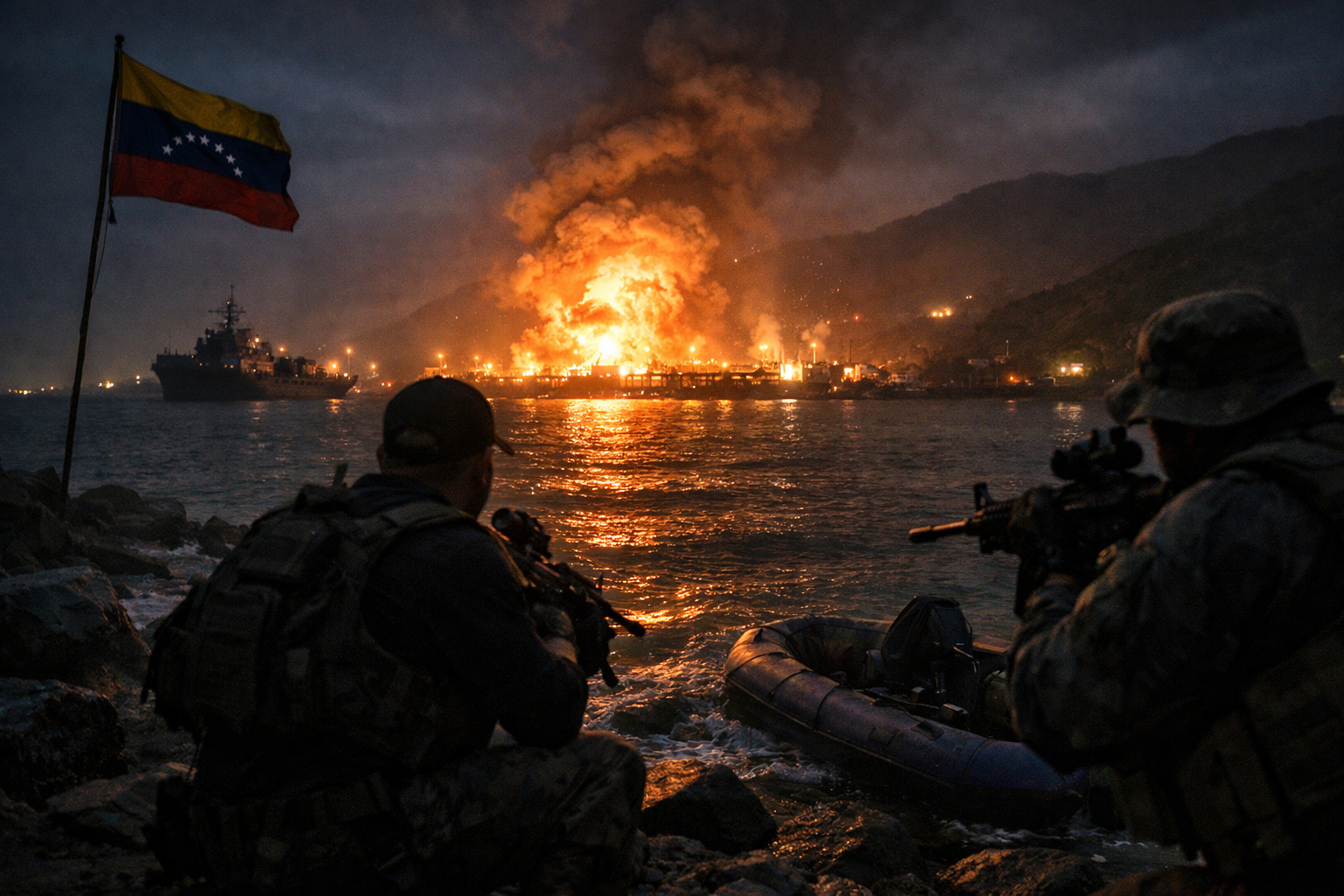
There is, after all, this thing called rule of law.
Yes, but what is it?
I think it means that there are rules, written down, that people and countries are supposed to obey.
Yes, but do they?
Well, . . . laws only deal with things that people and countries in fact do.
So then . . . ?
So then if there’s a law against drunk driving or government officials taking bribes, or a treaty prohibiting attacks on civilians in another country . . .
It’s because people drive drunk and government officials take bribes and armies attack civilians?
And if, under the United Nations Charter, states commit to settling their international disputes by peaceful means . . .
This is because states do not settle their disputes by peaceful means?
Français
Un poème pour le 3 janvier 2026
Il y a, après tout, une chose connue sous le nom d’« État de droit ».
Oui, mais qu’est-ce que c’est ?
Je pense que cela signifie qu’il existe des règles écrites que les personnes et les pays sont censés respecter.
Oui, mais le font-ils ?
Eh bien… les lois ne traitent que des choses que les gens et les pays ont l’habitude de faire.
Alors… ?
Alors, s’il existe une loi contre l’alcool au volant ou contre la corruption des fonctionnaires, ou un traité interdisant les attaques contre les civils dans un autre pays…
C’est parce que les gens conduisent en état d’ivresse, que les fonctionnaires acceptent des pots-de-vin et que les militaires attaquent les civils ?
Et si, en vertu de la Charte des Nations unies, les États s’engagent à régler leurs différends internationaux par des moyens pacifiques…
C’est parce que les États ne règlent pas leurs différends par des moyens pacifiques ?
Español
Un poema para el 3 de enero de 2026
Después de todo, existe algo llamado estado de derecho.
Sí, pero ¿qué es?
Creo que significa que hay normas, escritas, que las personas y los países deben obedecer.
Sí, pero ¿lo hacen?
Bueno, las leyes solo tratan de cosas que la gente y los países suelen hacer.
¿Y entonces…?
Y entonces, si hay una ley contra la conducción bajo los efectos del alcohol o contra los funcionarios públicos que aceptan sobornos, o si hay un tratado que prohíbe los ataques a civiles en otro país…
¿Es porque la gente conduce borracha, los funcionarios públicos aceptan sobornos y los ejércitos atacan a los civiles?
Y si, en virtud de la Carta de las Naciones Unidas, los Estados se comprometen a resolver sus controversias internacionales por medios pacíficos…
¿Es porque los Estados no resuelven sus controversias por medios pacíficos?
Two notes regarding violent aggression, international law, the USA and, secondly, Muslim slave-raiding
While working on this poem I came upon a Wikipedia article on Aerial bombardment and international law. The article quotes from a 2001 article by John R. Bolton, a US lawyer who was appointed to prominent government posts by Ronald Reagan, George W. Bush and Donald Trump. The article explains why, in Bolton’s opinion, the USA should not adhere to the Rome Statute of the International Criminal Courtthat established the ICC and four core international crimes: genocide, crimes against humanity, war crimes, and the crime of aggression.
A fair reading of the [Rome Statute], for example, leaves the objective observer unable to answer with confidence whether the United States was guilty of war crimes for its aerial bombing campaigns over Germany and Japan in World War II. Indeed, if anything, a straightforward reading of the language probably indicates that the court would find the United States guilty. A fortiori, these provisions seem to imply that the United States would have been guilty of a war crime for dropping atomic bombs on Hiroshima and Nagasaki. This is intolerable and unacceptable.”
The quotation is from John Bolton, “The Risks and Weaknesses of the International Criminal Court from America’s Perspective,” (Winter 2001), an article that was archived in 2016 at the Wayback Machine.
As regards the implications of laws and Muslim slave-raiding (for example, southward from Egypt into what is now South Sudan), it may be noted that the Sharia forbids the enslavement of Muslims. And this would seem, in some almost automatic way, to imply the enslavement by Muslims of non-Muslims. This is a large part of the history of “black Africa” on the whole, but more regarding the case of South Sudan may be found in Øystein H. Rolandsen and M.W. Daly’s A History of South Sudan: From Slavery to Independence (Cambridge University Press, 2016).
— Poem(s) and photograph by William Eaton.
 montaigbakhtinian
[…] As regards bombing, the United States and international law, one might see The rule of law, des moyens pacifiques… Tierra de Gracia, tal cual. […]