English followed by une version en français y una versión en español. A brief discussion of what provoked this poem is offered, in either English, French or Spanish, after each version of the poem.
Is democracy dead ? (The poem)
Is it time to say democracy’s dead,
And to ask how it ever lived,
And what on earth it was?
It was not nothing,
I don’t wish to say that.
Did it help make soldiers more willing to fight?
Did it force the greedy
To find ways of speaking
To promise what wouldn’t be done?
Or could democracy have encouraged
An idea dear to me:
That we are all equal and deserve to be,
That everyone is allowed and expected to speak and think for himself,
Or for herself or themselves,
Right up till the end of democracy
Among other things.
The chart, the provocation
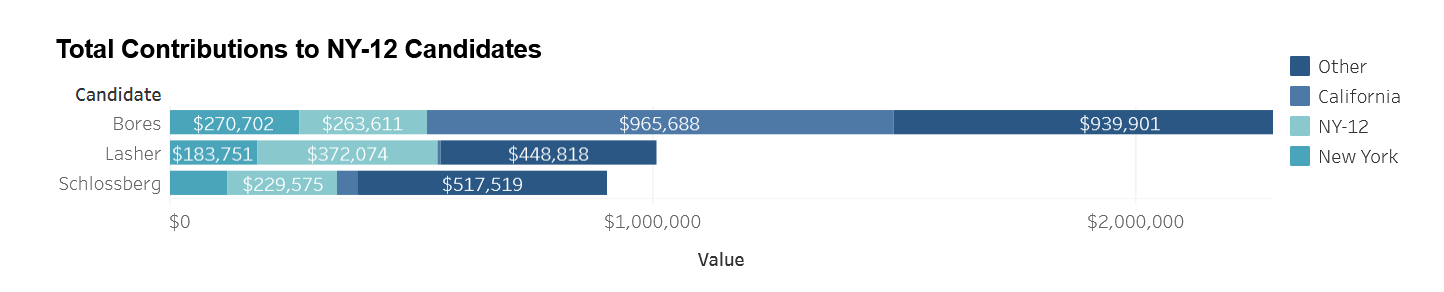
This poem might have been a response to any number of news bits, but in fact it was a chart that set me off. The chart showed the financial contributions to the three major candidates for a seat in the House of Representatives in the United States. The seat is in my old district in the middle of Manhattan. As can be seen, the amounts being contributed are large, and most of the money is coming from outside the district. Indeed it has been said that residents of Berkeley, California have contributed more to one of the candidates than have people in this, hardly poor (!) New York City district.
Why? Because there are businesses in California that are eager to have people in Congress willing to promote the legislation they want, and to block the legislation they do not want, as regards artificial intelligence and related technologies. But if this Congressional seat is available for purchase—and either by people and corporations outside the district or by people and corporations within it—what remains of democracy? And what is the purpose of this Constitution that the right-wing members of the Supreme Court think they are interpreting and upholding? And what can this word “democracy” mean or have meant, in the United States or elsewhere?
It may be noted that Dickens, Trollope and other nineteenth-century English authors had fun describing how seats in Parliament were bought, to include with generous offerings of alcohol on election days. And old Plato and his oligarchical friends . . .
Français
La démocratie est-elle morte ? (Le poème)
Est-il temps de déclarer que la démocratie est morte,
Et de se demander comment elle a bien pu exister,
Et ce qu’elle a bien pu être ?
Elle n’était pas pour rien,
Je ne veux pas dire cela.
A-t-elle aidé à rendre les soldats plus disposés à se battre ?
A-t-elle forcé les cupides
À trouver des moyens de parler
Pour promettre ce qui ne serait pas fait ?
Ou la démocratie aurait-elle pu encourager
Une idée qui m’est chère :
Que nous sommes tous égaux et méritons de l’être,
Que chacun peut et doit penser et s’exprimer par lui-même,
Ou par elle-même ou par eux-mêmes,
Jusqu’à la fin de démocratie
Entre autres choses.
Le graphique, la provocation
Ce poème aurait pu être une réaction à n’importe quel fait divers, mais c’est un graphique qui m’a inspiré. Ce graphique présentait les contributions financières versées aux trois principaux candidats pour un siège à la Chambre des représentants des États-Unis. Ce siège se trouve dans mon ancienne circonscription, au cœur de Manhattan. Comme on peut le constater, les montants versés sont considérables, et la majeure partie de cet argent provient de l’extérieur de la circonscription. En effet, il a été dit que les habitants de Berkeley, en Californie, ont contribué davantage à l’un des candidats que les gens de ce district, à peine pauvre (!) de la ville de New York.
Pourquoi ? Parce qu’il existe en Californie des entreprises désireuses de voir au Congrès des personnes prêtes à promouvoir les lois qu’elles veulent et à bloquer celles qu’ils ne veulent pas, en ce qui concerne l’intelligence artificielle et les technologies connexes. Mais si ce siège au Congrès est disponible à l’achat — et soit par des personnes et des entreprises en dehors du district, soit par des personnes et des entreprises à l’intérieur de celui-ci — que reste-t-il de la démocratie ? Et quel est le but de cette Constitution que les membres de la Cour suprême de tendance “conservatrice” pensent interpréter et défendre ? Et que peut bien signifier, ou qu’a-t-elle signifié, ce mot « démocratie », aux États-Unis ou ailleurs ?
On peut noter que Dickens, Trollope et d’autres auteurs anglais du XIXe siècle se sont amusés à décrire comment les sièges au Parlement étaient achetés, notamment grâce à de généreuses distributions d’alcool les jours d’élection. Et le bon vieux Platon et ses amis oligarques…
Español
¿Ha muerto la democracia? (El poema)
¿Ha llegado el momento de decir que la democracia ha muerto,
y preguntarnos cómo llegó a existir,
y qué demonios fue en realidad?
No fue nada,
no quiero decir eso.
¿Ayudó a que los soldados estuvieran más dispuestos a luchar?
¿Obligó a los codiciosos
a encontrar maneras de hablar
para prometer lo que ne se haría?
¿O podría la democracia haber fomentado
una idea que me es querida:
que todos somos iguales y merecemos serlo,
que todos pueden et deven piensar y expresar por sí mismos
o por sí misma o por sí mismos,
hasta el final de democracia
entre otras cosas?
El gráfico, la provocación
Este poema podría haber sido una respuesta a cualquier noticia, pero, de hecho, fue un gráfico lo que me sacó de quicio. El gráfico mostraba las contribuciones financieras a los tres principales candidatos para un escaño en la Cámara de Representantes en los Estados Unidos. El escaño está en mi antiguo distrito en el centro de Manhattan. Como se puede ver, las cantidades aportadas son grandes y la mayor parte del dinero proviene de fuera del distrito. De hecho, se ha dicho que los residentes de Berkeley, California, han contribuido más a uno de los candidatos que la gente de este distrito de la ciudad de Nueva York, ¡apenas pobre!
¿Por qué? Porque hay empresas en California que están ansiosas por tener gente en el Congreso dispuesta a promover la legislación que quieren, y a bloquear la legislación que no quieren, con respecto a la inteligencia artificial y las tecnologías relacionadas. Pero si este escaño en el Congreso está a la venta —ya sea por parte de personas y empresas de fuera del distrito o de personas y empresas de dentro de él—, ¿qué queda de la democracia? ¿Y cuál es el objetivo de esa Constitución que los miembros del Tribunal Supremo de tendencia «conservadora» creen interpretar y defender? ¿Y qué puede significar o haber significado esta palabra, «democracia», en Estados Unidos o en cualquier otro lugar?
Cabe señalar que Dickens, Trollope y otros autores ingleses del siglo XIX se divirtieron describiendo cómo se compraban los escaños en el Parlamento, para incluir con generosas ofrendas de alcohol en los días electorales. Y el viejo Platón y sus amigos oligarcas…
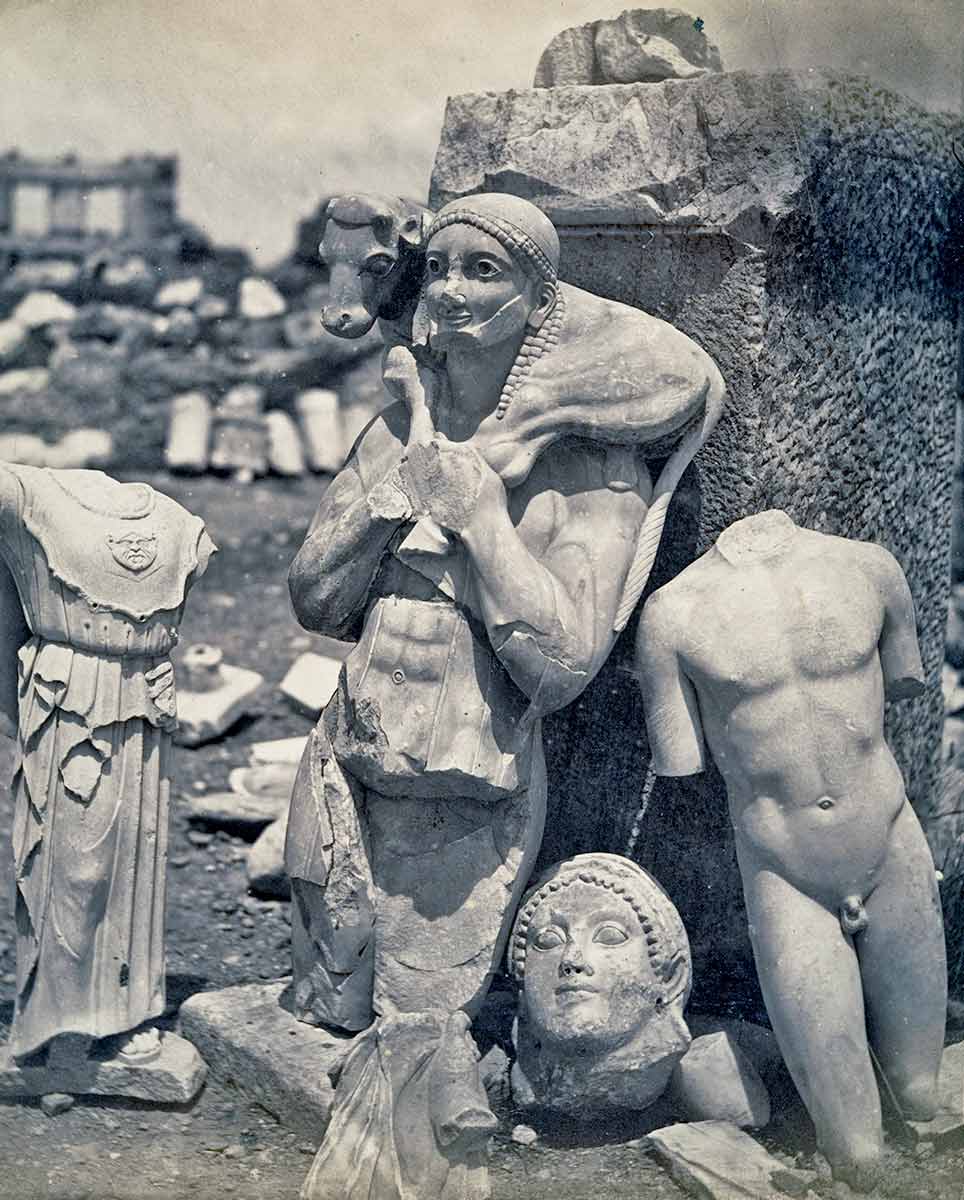
— Poem(s) by William Eaton. The images were found on a Web post: 7 Times the Parthenon Was Transformed and Destroyed, by Anna Gustafsson, a writer and an archaeologist based in Athens. It seems the statues photo comes from the MET in New York and the photo of the destroyed Parthenon from the Victoria & Albert museum in London.
Work on this poem led me to read some pages of the Stanford Encyclopedia of Philosophy‘s entry on Democracy. And to recall a key phrase from Kant, Grundlegung zur Metaphysik der Sitten (Groundwork of the Metaphysics of Morals): “Handle so, daß du die Menschheit, sowohl in deiner Person als in der Person eines jeden anderen, jederzeit zugleich als Zweck, niemals bloß als Mittel brauchest.”
Act in such a way that you treat humanity, both in your own person and in the person of every other, at all times as an end in itself, and never merely as a means.


Merci beaucoup
Et merci à vous.