The three English poems—“Though her partner was unable to dance,” I would like for all this, and Should he be as he was?—are, one after the other, followed by either poems or prose translations en français y en español.
Though her partner was unable to dance
The fact it was, and for all to see:
Her partner could not dance.
And would a woman other than she
Have wished to swirl and let loose?
But if ill at ease her shaggy man was,
With this she found herself pleased.
To teach and lead, with a pitying smile,
Her stumbling, unsuspecting moose.
Même si ce débraillé se sentait mal à l’aise
C’était un fait, que tout le monde voyait :
Son partenaire ne savait pas danser.
Une autre femme aurait peut-être rêvé
De virevolter avec grâce, de se laisser aller.
Mais si ce débraillé se sentait mal à l’aise,
À elle, cela faisait un plaisir.
D’enseigner et de mener, avec compassion,
Son élan maladroit et naïf.
Aunque su pareja no sabía bailar
Era un hecho, a la vista de todos:
Su prometido no sabía bailar.
Y otra mujer hubiera anhelado…
Se soltar de verdad, con elegancia girar.
Pero si este torpe despeinado…
No podía estar más contenta.
Enseñar y guiar con compasión
Ese inocente que a ciegas iba.
I would like for all this the blame to take
I would like for all this the blame to take,
Though, except perhaps for this me,
It seems no one’s been harmed.
And this me, well, he had his reasons,
Which have their place in his thoughts,
Ever ready to have made a mistake.
Je voudrais endosser toute la responsabilité de cela
Je voudrais endosser toute la responsabilité de cela, bien qu’il semble que personne ne soit lésé, à part peut-être moi, tout seul, et moi, j’avais mes raisons, et je vis avec elles maintenant, toujours prêt à avoir commis une erreur.
Me gustaría asumir toda la culpa de esto
Me gustaría asumir toda la culpa de esto, aunque parece que nadie sale perjudicado, excepto quizá yo solo, y tenía mis razones, y vivo con ellas, siempre a un error cometerse dispuesto.
Should he be as he was?
You could say, he would say,
He had ways that with others didn’t work.
Only by luck was he still living
Accomplished, wealthy, at ease.
Should he be as he was amazed,
To have survived, and even thrived?
Or should he imagine that in this strangeness
Might there be a way to be?
Devrait-il être tel qu’il était ?
On pourrait dire, dirait-il, qu’il avait des manières qui ne fonctionnaient pas très bien avec les autres. Ce n’est que par chance qu’il était encore en vie, réussi, aisé, serein.
Devrait-il être tel qu’il était, étonné d’avoir survécu et prospéré ? Ou imaginer que dans son étrangeté il y ait une façon d’être ?
¿Debería ser como era?
Se podría decir, diría él, que tenía modales extraños y antisociales; solo por suerte seguía vivo, triunfado, adinerado, tranquilo.
¿Debería ser tal y como era, asombrado de haber sobrevivido y prosperado? ¿O imaginar que en su rareza podría haber una forma de ser?
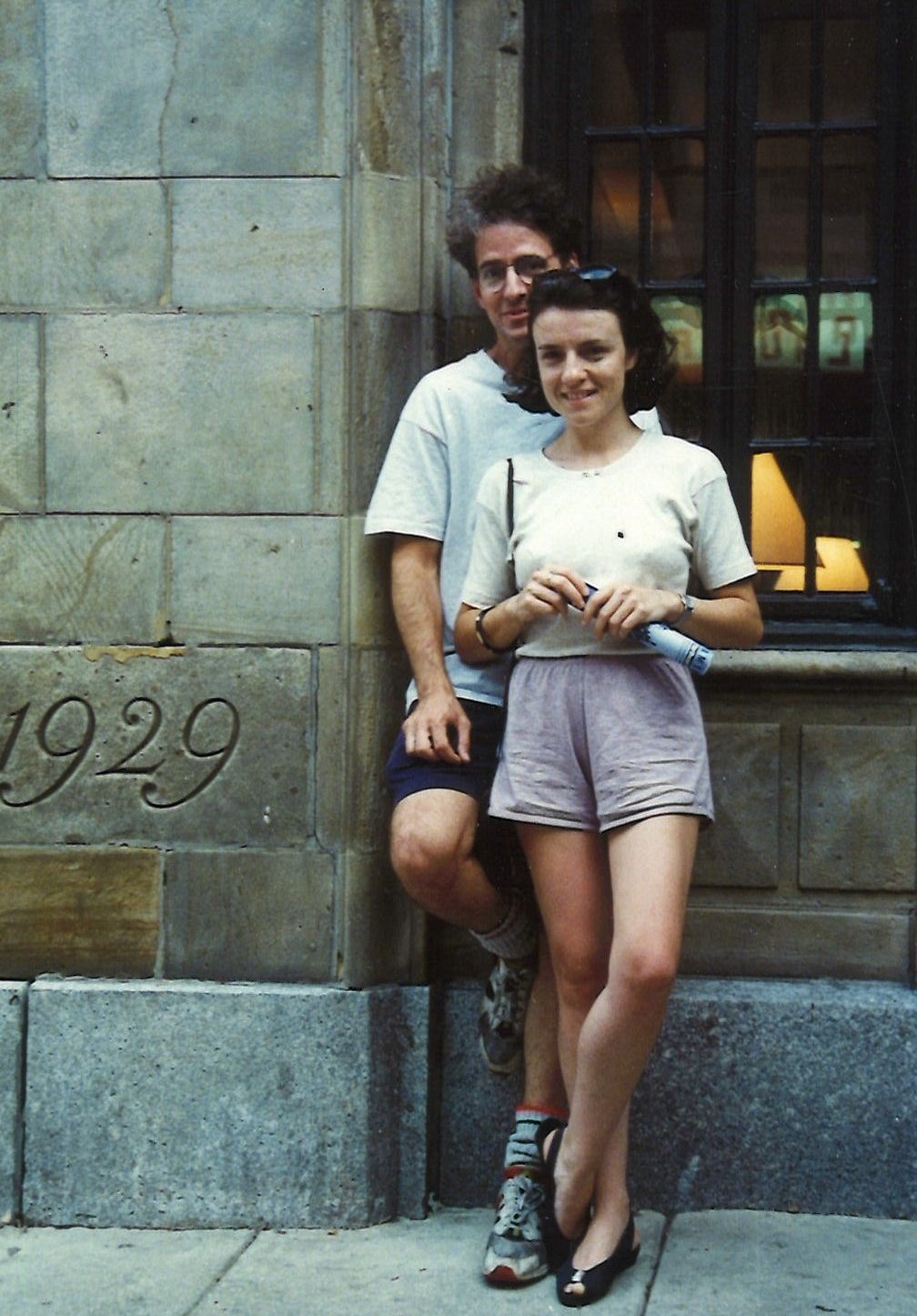
— Poems by William Eaton. And was it my old friend Adelino who took this photograph, in New York? If not in 1929, but still . . . almost forty years ago.
For more: 4 billion eggs.

