FROM SEQUENCE 2013
April 2013
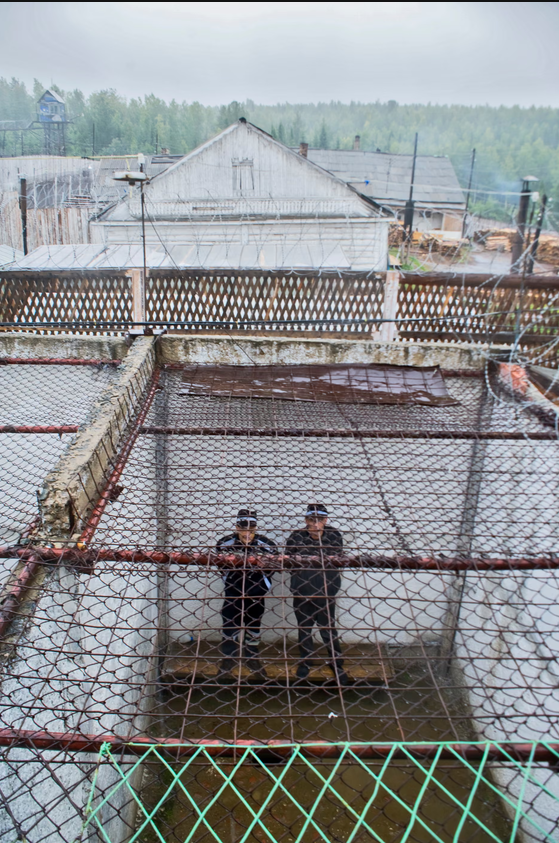 Shortly after I completed my essay on The Importance of Being Earnest and the role of the unsaid in literature and philosophy, my son’s Russian teacher had him read a 24-line Pushkin poem, “Кавказ,” The Caucasus. On the Web I found an excellent translation by Irina Zheleznova, best known for her translations of fairy tales. Herewith a few key moments, let’s call them:
Below me the silver-capped Caucasus lies…
A stream at my feet rushes, foaming and roaring. . . .He lashes about like a beast in a cage
With food out of reach, full of hunger and craving,
And licks at the boulders, and, howling and raving,
Strikes out at the shore in a frenzy and rage. . . .
We might say that this appears to be a description by a man looking down from on high at a rushing river, and also (in other lines) at an eagle, some men, pasturelands, flocks of sheep. Sensing, however, that the poem must actually be about something else, I e-mailed an old friend who has been a Pushkin scholar. The key lines, he wrote back, were the ones about the beast in a cage:
Играет и воет, как зверь молодой,
Завидевший пищу из клетки железной;He plays and fights like a young beast
Hungry, craving in an iron cage.
Now I was on my way; a day of mining the Web dawned. It quickly became clear how, and as my friend had suggested, Pushkin’s description (from 1829) had been a way of talking about the circumstances and mood of the Russian people. On the one hand, the iron cage was and has lived on as a symbol of repressive government (under the Tsars, the Communists, and Putin and his homeland security network). The verb form “воет” comes from the infinitive “воевать,” to be at war with, and nicely the Reverso bilingual dictionary website offers this set of examples: воевать с бюрократами или против бюрократов—to wage war on or against bureaucrats, or against the bureaucracy. At the same time, Pushkin was simply recalling a specific moment in Russian history. In 1773, Yemelyan Ivanovich Pugachev, a Cossack, led a peasant revolt and issued a manifesto emancipating the serfs. Betrayed by his own troops, Pugachev was taken to Moscow where the government authorities, before decapitating and quartering him, paraded him around the city in an iron cage. (The river in Pushkin’s poem is the Terek, and this links the poem to the region where Pugachev’s rebellion had begun.)
“Кавказ” is also one of the texts in which Pushkin aligned himself with what we might now, anachronistically, call the dissident literary tradition. His beast recalled a line from an older Russian poet, Vasily Kirillovich Trediakovsky, a line in which Trediakovsky had described the Russian empire as “a stout monster, wild and huge.” And Pushkin was recalling, too, the adaptation of this line to serve as the epigraph for Aleksander Nikolayevich Radishchev’s Путешествие из Петербурга в Москву (The Journey from St. Petersburg to Moscow), a critique of Catherine the Great’s Russia, its stifling government and serfdom.
Amid all this (and my too hasty researching) I felt a bit chagrined to have written several thousand words about the unsaid in literature without mentioning one of its most obvious and frequent causes. In many cases the source and import of a text must go unstated because it is not “politically correct.” And so—to save their own skins and to give fellow citizens a way of speaking about what cannot be discussed directly—writers offer allusions, analogies and metaphors. I was doubly chagrined because this perspective—or this obvious fact of human literary history—could have informed my reading of The Importance of Being Earnest. Or, let’s say, it could have done this if and only if one were to take the play as, at least in part, offering a critique of a society in which homosexual acts and many other forms of passion and amusement were quite common but could not be openly admitted to.
But “I do not approve of anything that tampers with natural ignorance,” Lady Bracknell noted, and it would be only fitting to let her have the last word. Moreover, she can offer us a Wildean counterweight to Pushkin, Radishchev and Trediakovsky’s earnest efforts to raise the consciousness of the Russian people.
Ignorance is like a delicate exotic fruit; touch it and the bloom is gone. The whole theory of modern education is radically unsound. Fortunately in England, at any rate, education produces no effect whatsoever. If it did, it would prove a serious danger to the upper classes, and probably lead to acts of violence in Grosvenor Square.
The Russian ruling classes, we could say, have had to confront much the same problem as Lady Bracknell and her ilk: an educated populace can be a dangerous thing. For various historical reasons Russians have been unable to adopt the Anglo-Saxon approach by which the masses, masses of would-be writers included, are left to say more or less whatever they want, but the writing jobs, or the well-paying ones, are reserved, more or less, for those who support and help develop the reigning ideology. Or who know how, as Wilde did, to sublimate thoughts and feelings in “pure verbal opera.”
In researching the present piece, I came across an article from a leading US magazine, an article in which the journalist retraced the route of Radishchev’s eighteenth century journey as a way of looking at Putin’s Russia. At one point the American journalist mocks how Russian newspapers, for an extra fee, will publish advertising copy in such a way that it looks like a regular article. What a good deal of unsaidness there was here! I could not help feeling that the journalist had landed his foreign-correspondent’s post not so much on account of his evident earnestness and enthusiasm as thanks to a certain well-educated ignorance. He seemed not to be aware—or was it that, in publishing a piece about another country, he, his editors and publisher were first and foremost encouraging a lack of awareness about life in the United States? For a fee, in the pages of their own magazine—and in our movies, television and radio shows, on our websites—advertising and public-relations copy may be passed off as news, or as just an incidental part of the decor, etc. In such cases, it is not the message that goes “unsaid,” but rather who has paid for it. Money is paid so that certain ads will be placed next to certain types of articles, and to encourage the writing of certain types of articles and to discourage others. One morning during the time I was editing the present text I heard a heart specialist on a French radio station (Europe1) talk about how for a decade of so large multinational drug companies had been able to suppress publication of research calling into question the value of statin medication.
(An interesting thought experiment: What if every article, movie, Word Press blog, etc., began by identifying the source of its or its writer’s funding? When I read an op-ed piece and the writer is identified as being employed by this or that think tank, I am eager to know—but am never told—what wealthy individuals, corporations or foundations are paying for the tank, the thinking, the writer’s house, his kids’ travel-soccer fees and private school tuitions. Marx, I have recently read, was funded at first by the leading businessmen of Cologne, who were seeking ways of undermining the authority of the Prussian state.)
We are in danger here, however, of being carried to a whole ‘nother dimension of the unsaid, and there is another beckoning as well. The “unsaid” that a reader perceives in a writer’s work may be a projection of the reader’s own thoughts and feelings, or it may be on account of personal experiences that the reader is able to hear the unsaid in another’s work. Saving these subjects for other days, I will conclude the present piece by noting that Radishchev’s journey from St. Petersburg to Moscow landed him in Siberia for ten years. “Following Radishchev,” Pushkin apparently once wrote, “I sing of liberty.”
— William Eaton
Links and thanks
- Image comes, somewhat anachronistically, from a 2016 Guardian photo essay The inmates preparing to leave Russia’s toughest prison – in pictures. Credit: Fyodor Telkov and Denis Tarasov for Russia Beyond the Headlines, part of the New East network.
- The previous essay on The Importance of Being Earnest
- A copy of Pushkin’s poem in Russian side by side with Irina Zheleznova’s English translation
- A Journey from Saint Petersburg to Moscow
by Aleksander Nikolayevich Radishchev; English translation (Harvard University Press, 1958)
- Moscow to the End of the Line, available via Agni Online, also moves from Russian literature to the suppression of information by drug companies.
For getting me started on this brief exploration of Russian literary history, my thanks to Brian Baer, Professor & Graduate Coordinator, Modern and Classical Language Studies, Kent State University. Any errors or political incorrectnesses are entirely my own doing. Comments and corrections are welcome, as always.

