English followed by une version en français y una versión en español. There is also an Afterword, which includes two verses from the song Love Potion No. 9 (1959) and an observeration of Descartes’s, from le Discours de la méthode (1637).
Is nothing alien alien to me?
 Once upon a time, in these days of phishing, deep fakes and all the rest, I was sitting in a French café working on my laptop when there arrived an email that began more or less:
I came across your poetry collection Light verse, light verse: Everything else is worse, and what stayed with me was the way you use light verse not as an escape from serious subjects, but as a sharper way of approaching them. The combination of humor, satire, politics and social observation gives the collection a wit that feels both playful and intellectually engaged.
It would be hard to write two sentences that might better warm this writer’s heart. And the email seemed to come from an editor at Graywolf, a distinguished American small press. And the editor whose name was attached to the email (which offered both a Graywolf address and a personal email address) is also a young, bilingual poet, the author of a line I quite like: “Nothing alien is alien to me.”
“She”—the emailer—wanted to hear what I was currently working on. If I had a literary agent, she would be “happy to discuss the next steps” with her or him.
Some American friends, more savvy than I, were not enthusiastic. The letter’s prose sounded too much like an AI overview. The email could be the beginning of a phishing expedition.
I proposed to the emailer—to an email address of Ms. Liu’s impersonators? —that we begin with a zoom call. This has seemed to be a non-starter; I have not heard from anyone (or anything) since.
Above all I am struck by how difficult it can be to realize that a machine is not a person. (Though of course, yes, the machine, or software, is only a pawn in some human or humans’ malicious or thieving game.) There persists in my mind a feeling that some Madame Liu has been generous and thoughtful and in bad faith and devious, whereas in fact no actual Anni is anywhere to be found in all this.
And of course the real Anni Liu may be more aggrieved than I am in this case. I can simply not respond to the phishers, but her name, role, identity would seem to have been taken over by an impostor and for nasty purposes.
Still . . . As some may regret that the “lovers” they pay are more attentive, or lewd, than unpaid companions, so others of us may regret that our most thoughtful and generous readers prove to be artificial? And into what netherworld do we enter if we go on to quote from these readers’ kind words? E.g.:
What particularly stood out was your willingness to move freely across poetic forms and traditions. The influence of writers such as Auden, Larkin, Michael Flanders, Edward Lear, Ogden Nash, Dorothy Parker, and Stevie Smith provides an interesting lineage, while your inclusion of poems in French and Spanish and your engagement with contemporary social and political questions give the collection a distinctly personal and twenty-first-century character.
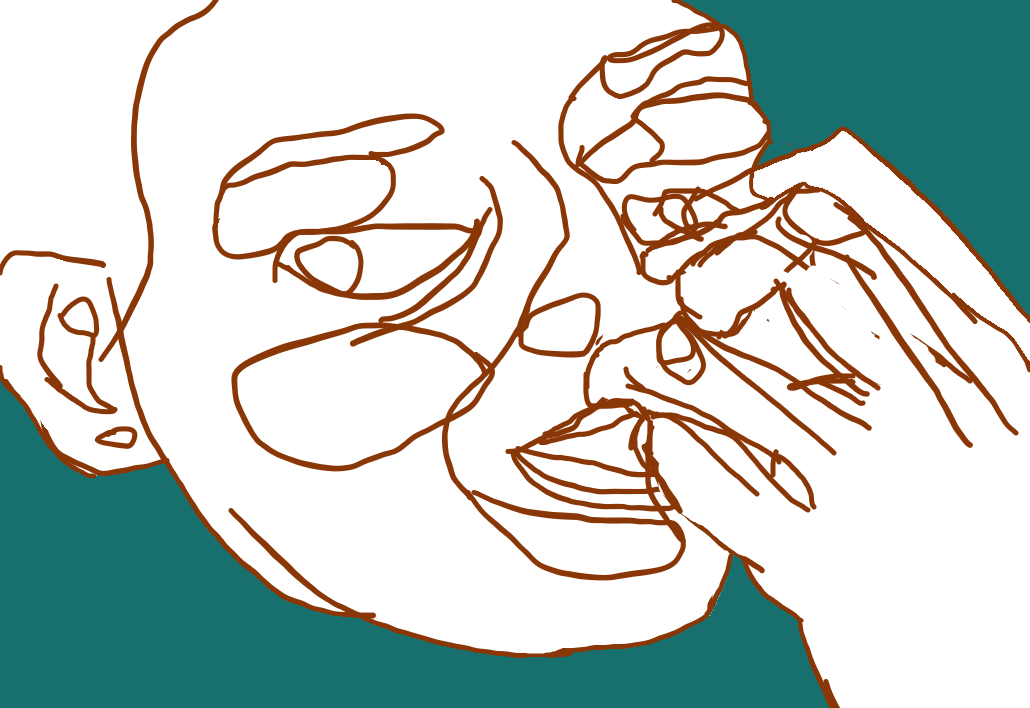
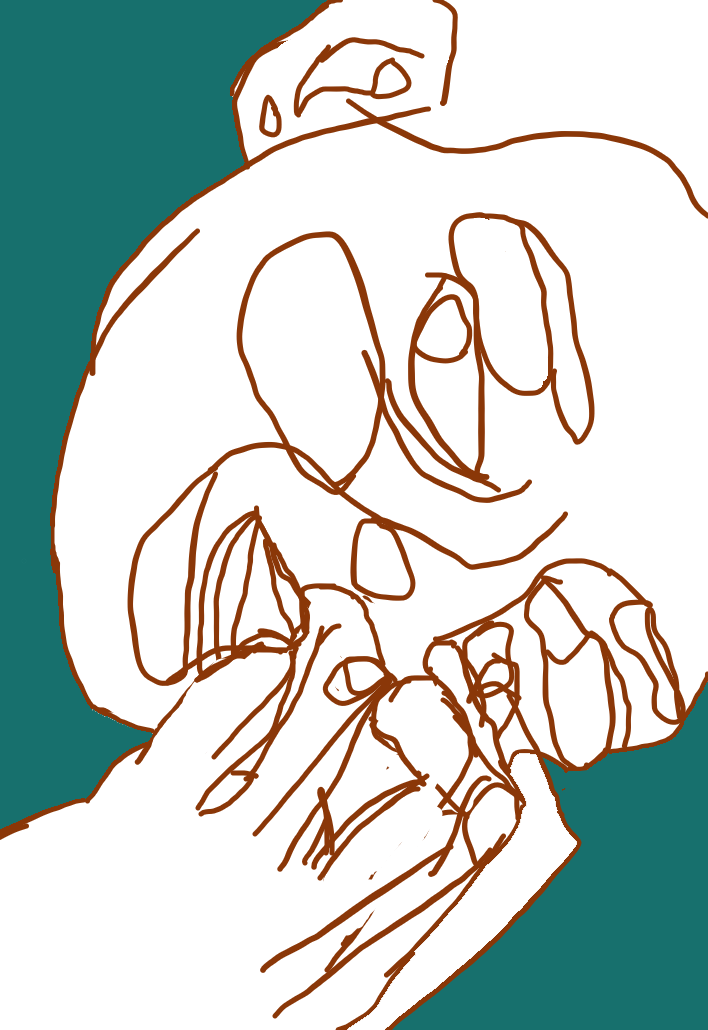
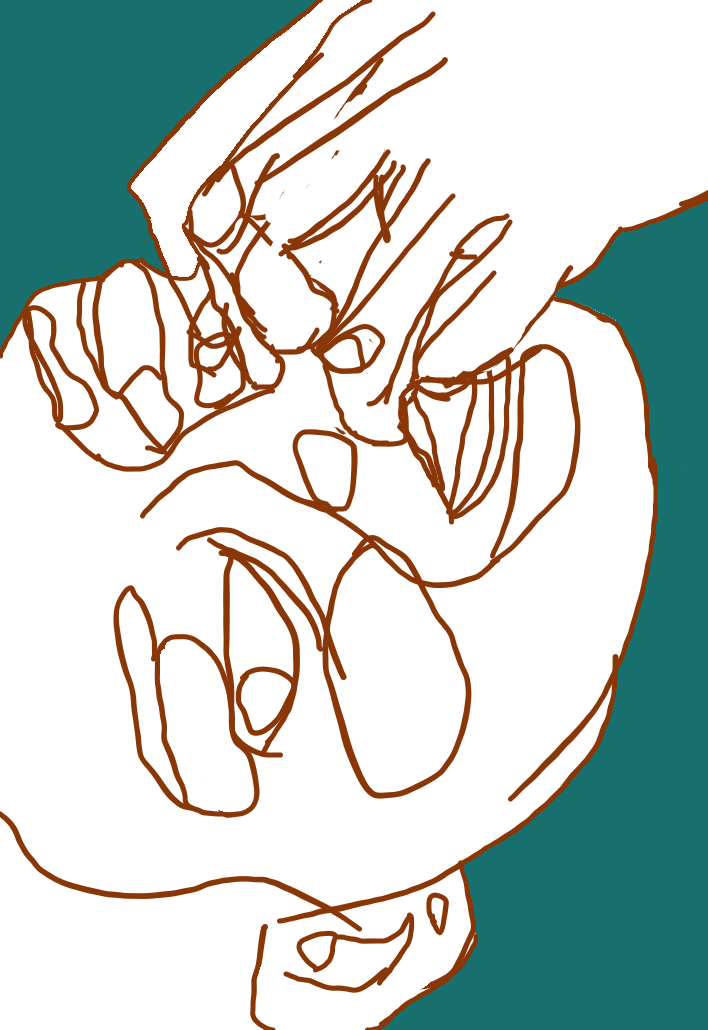
Yrs. in struggle, William Eaton (who happens also to have made the drawing of the woman’s face with fingers).
Afterword (four additions)
Having typed the words “Madame Liu,” I was immediately reminded of a song from my childhood, Love Potion No. 9 (1959), from which these two verses:
I took my troubles down to Madame Rue
You know that gypsy with the gold-capped tooth
She’s got a pad down on Thirty-Fourth and Vine
Sellin’ little bottles of Love Potion Number Nine
I didn’t know if it was day or night
I started kissin’ everything in sight
But when I kissed a cop down on Thirty-Fourth and Vine
He broke my little bottle of Love Potion Number Nine
The song was written in 1959 by Jerry Leiber and Mike Stoller and first recorded by the Clovers. In 1964, The Searchers made it a hit.
And should one wish to explore further the type of phishing noted in the present account, one might see one Bloomberg published in July, A Famous Author Offered to Help My Career. Or Did She? by Dave Roman. The subhead reads: “The unprompted emails were so chatty, they never seemed too good to be true.”
Thirdly, should one wish to explore further the challenges of finding truth in and among all the seeming truths with which our world abounds, one might start with Descartes, Discours de la méthode and his commitment: « de ne recevoir jamais aucune chose pour vraie que je ne la connusse évidemment être telle » et de réputer « presque pour faux tout ce qui n’était que vraisemblable. » (To never accept anything as true unless I knew it to be so with absolute certainty and to regard almost everything that was merely plausible as false.)
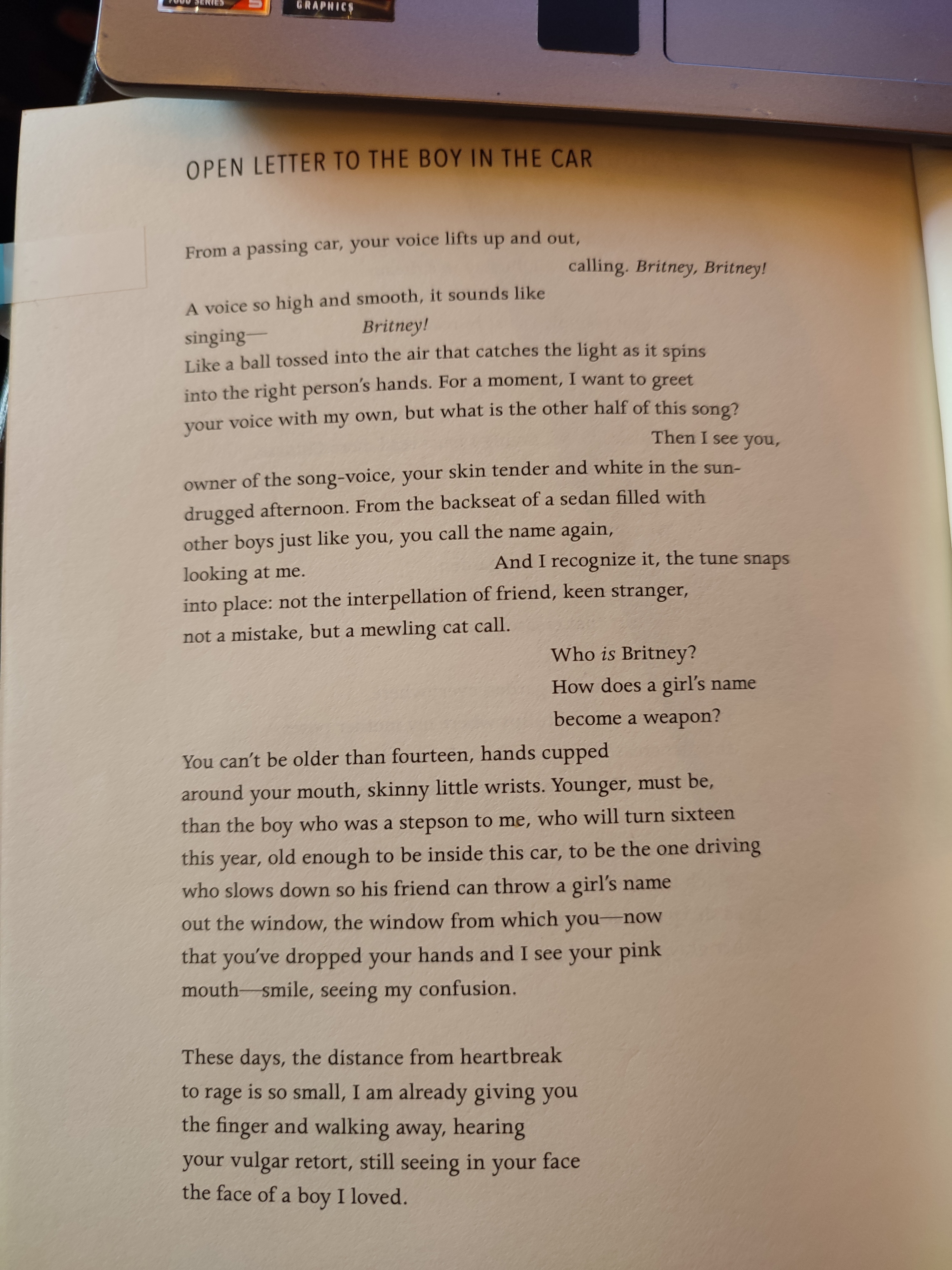
Finally, I note that after I published this piece I received from the United States a copy of Madame Liu’s 2021 poetry collection, Border Vista. I am not the first to note that the poem of hers that stands head and shoulders above all the rest is the poem which I have reproduced below.
It could advance our thinking about poetry to ruminate on why this poem is so good. My too-quick thoughts include: emotional sophistication, the focus or subject shifting unexpectedly, the poem expanding emotionally and intellectually. There is also a sense in which what poetry gives us, above all, is a few good lines, and in this case there’s one: “These days the distance from heartbreak / to rage is so small.”
A less-enthusiastic writer friend has said the poem would be more effective were the lines tighter. This speaks to another quality of poetry—concision—; however, the poem’s looseness or prosy quality has not bothered me. (Cf. Lunch Poem (with such apologies as may be due to Frank O’Hara and “The Day Lady Died”).)
Français
Rien d’étranger ne m’est étranger ?
 Il était une fois, en ces temps de hameçonnage, de deepfakes et tout le reste, j’étais assis dans un café français, en train de travailler sur mon ordinateur portable, quand j’ai reçu un mail qui commençait à peu près ainsi (je traduis de l’anglais) :
Je suis tombé sur votre recueil de poésie Light verse, light verse: Everything else is worse, et ce qui m’a marqué, c’est la façon dont vous utilisez la poésie légère non pas pour fuir les sujets sérieux, mais pour les aborder avec plus de perspicacité. Le mélange d’humour, de satire, de politique et d’observation sociale confère à ce recueil un esprit à la fois ludique et intellectuellement engagé.
Il serait difficile d’écrire deux phrases qui réchaufferaient davantage le cœur de cet écrivain. Et ce mail semblait provenir d’une éditrice chez Graywolf, une petite maison d’édition américaine réputée. Et le rédacteur dont le nom figurait dans le mail (qui indiquait à la fois une adresse Graywolf et une adresse mail personnelle) est aussi un jeune poète bilingue, autrice d’un vers que j’apprécie : “Nothing alien is alien to me.” (Rien d’étranger ne m’est étranger.)
« Elle » — l’expéditrice du courriel — souhaitait savoir sur quoi je travaillais actuellement. Si j’avais un agent littéraire, elle serait “happy to discuss the next steps” : ravie de discuter des prochaines étapes avec lui ou elle.
Certains de mes amis américains, plus avertis que moi, n’étaient pas enthousiastes. Le style de la lettre ressemblait trop à un texte IA. Ce mail pouvait bien être le début d’une tentative d’hameçonnage.
J’ai proposé à l’expéditrice — à une adresse mail appartenant peut-être à des imposteurs de Mme Liu ? — de commencer par un appel Zoom. Cela a semblé ne mener nulle part ; je n’ai plus eu de nouvelles de personne (ni de rien) depuis.
Par-dessus tout, je suis frappé par la difficulté qu’il peut y avoir à réaliser qu’une machine n’est pas une personne. (Même si, bien sûr, la machine ou logiciel n’est qu’un pion dans le jeu malveillant ou malhonnête d’un ou plusieurs humains.) Il me reste en tête le sentiment qu’une certaine Madame Liu a été à la fois généreuse et attentionnée, mais aussi de mauvaise foi et sournoise, alors qu’en réalité, on ne trouve nulle part aucune Anni dans cette histoire.
Et bien sûr, la véritable Anni Liu est peut-être plus lésée que moi dans cette affaire. Je peux simplement ne pas répondre aux hameçonneurs, mais son nom, son rôle, son identité semblent avoir été usurpés par un imposteur à des fins malveillantes.
Pourtant… Tout comme certains peuvent regretter que les « amants » qu’ils paient soient plus attentionnés, voire plus lubriques, que des compagnons non rémunérés, certains d’entre nous vont-ils en arriver à regretter que nos lecteurs les plus attentionnés et les plus généreux se révèlent artificiels ? Et dans quel royaume des morts seraient-nous engloutis si nous nous mettions à citer les aimables propos de ces lecteurs? Par exemple :
Ce qui m’a particulièrement marqué, c’est votre volonté de passer librement d’une forme poétique à l’autre et d’une tradition à l’autre. L’influence d’écrivains tels qu’Auden, Larkin, Michael Flanders, Edward Lear, Ogden Nash, Dorothy Parker et Stevie Smith constitue une lignée intéressante, tandis que l’inclusion de poèmes en français et en espagnol et votre engagement sur les questions sociales et politiques contemporaines confèrent à ce recueil un caractère résolument personnel et propre au XXIe siècle.
Solidaire dans la lutte, William Eaton
Español
¿Nada extranjero me resulta extraño?
 Érase una vez, en estos tiempos de phishing, deepfakes y todo lo demás, estaba sentado en una cafetería francesa, trabajando con mi portátil, cuando recibí un correo electrónico que empezaba más o menos así (lo traduzco del inglés):
Me he topado con su poemario Light verse, light verse: Everything else is worse, y lo que más me ha llamado la atención es la forma en que utiliza la poesía ligera, no para eludir los temas serios, sino para abordarlos con mayor perspicacia. La mezcla de humor, sátira, política y observación social confiere a este libro un espíritu a la vez lúdico e intelectualmente comprometido.
Sería difícil escribir dos frases que alegraran más el corazón de este escritor. Y este correo parecía proceder de una editora de Graywolf, una pequeña y prestigiosa editorial estadounidense. Y el editor cuyo nombre figuraba en el correo electrónico (en el que se indicaban tanto una dirección de Graywolf como una dirección de correo personal) también es un joven poeta bilingüe, autora de un verso que me gusta: «Nothing alien is alien to me» (Nada extranjero me resulta ajeno).
«Ella» —la remitente del correo— quería saber en qué estaba trabajando actualmente. Si tuviera un agente literario, estaría «happy to discuss the next steps»: encantada de hablar de los próximos pasos con él o ella.
Algunos de mis amigos estadounidenses, más experimentados que yo, no se mostraron muy entusiasmados. El estilo de la carta se parecía demasiado al de un texto generado por IA. Ese correo bien podría ser el comienzo de un intento de phishing.
Le propuse a la remitente —¿una dirección de correo que tal vez perteneciera a unos impostores de la Sra. Liu?— que empezáramos con una llamada por Zoom. Pareció no llevar a ninguna parte; desde entonces no he vuelto a saber nada de nadie (ni de nada).
Por encima de todo, me llama la atención lo difícil que puede resultar darse cuenta de que una máquina no es una persona. (Aunque, por supuesto, la máquina o el software no son más que un peón en el juego malintencionado o deshonesto de uno o varios seres humanos.) Me queda la sensación de que una tal señora Liu fue a la vez generosa y atenta, pero también de mala fe y astuta, mientras que, de hecho, no hay rastro alguno de ninguna Anni en todo esto.
Y, por supuesto, la verdadera Anni Liu quizá sea la más perjudicada que yo en este asunto. Puedo simplemente optar por no responder a los estafadores, pero su nombre, su papel y su identidad parecen haber sido usurpados por un impostor con fines maliciosos.
Aun así… Del mismo modo que algunos pueden lamentar que los «amantes» a los que pagan sean más atentos -o más lascivos- que las compañeras a las que no se paga, ¿puede ser que otros de nosotros lamentemos que nuestros lectores más atentos y generosos resulten ser falsos? ¿Y en qué inframundo nos adentraremos si empezáramos a citar las amables palabras de esos lectores? Por ejemplo:
Lo que más me ha llamado la atención es su voluntad de pasar libremente de una forma poética a otra y de una tradición a otra. La influencia de escritores como Auden, Larkin, Michael Flanders, Edward Lear, Ogden Nash, Dorothy Parker y Stevie Smith constituye una interesante línea de sucesión, mientras que la inclusión de poemas en francés y en español y su compromiso con las cuestiones sociales y políticas contemporáneas confieren a esta recopilación un carácter decididamente personal y propio del siglo XXI.
Solidario en la lucha, William Eaton


[…] — Poem(s) and photograph by William Eaton. Check out his Light verse, light verse: Everything else is worse. AI has weighed in: this book uses “light verse not as an escape from serious subjects, but as a sharper way of approaching them.” (See Is nothing alien alien to me? (Hameçonnage, deepfakes et y todo lo demás.) […]