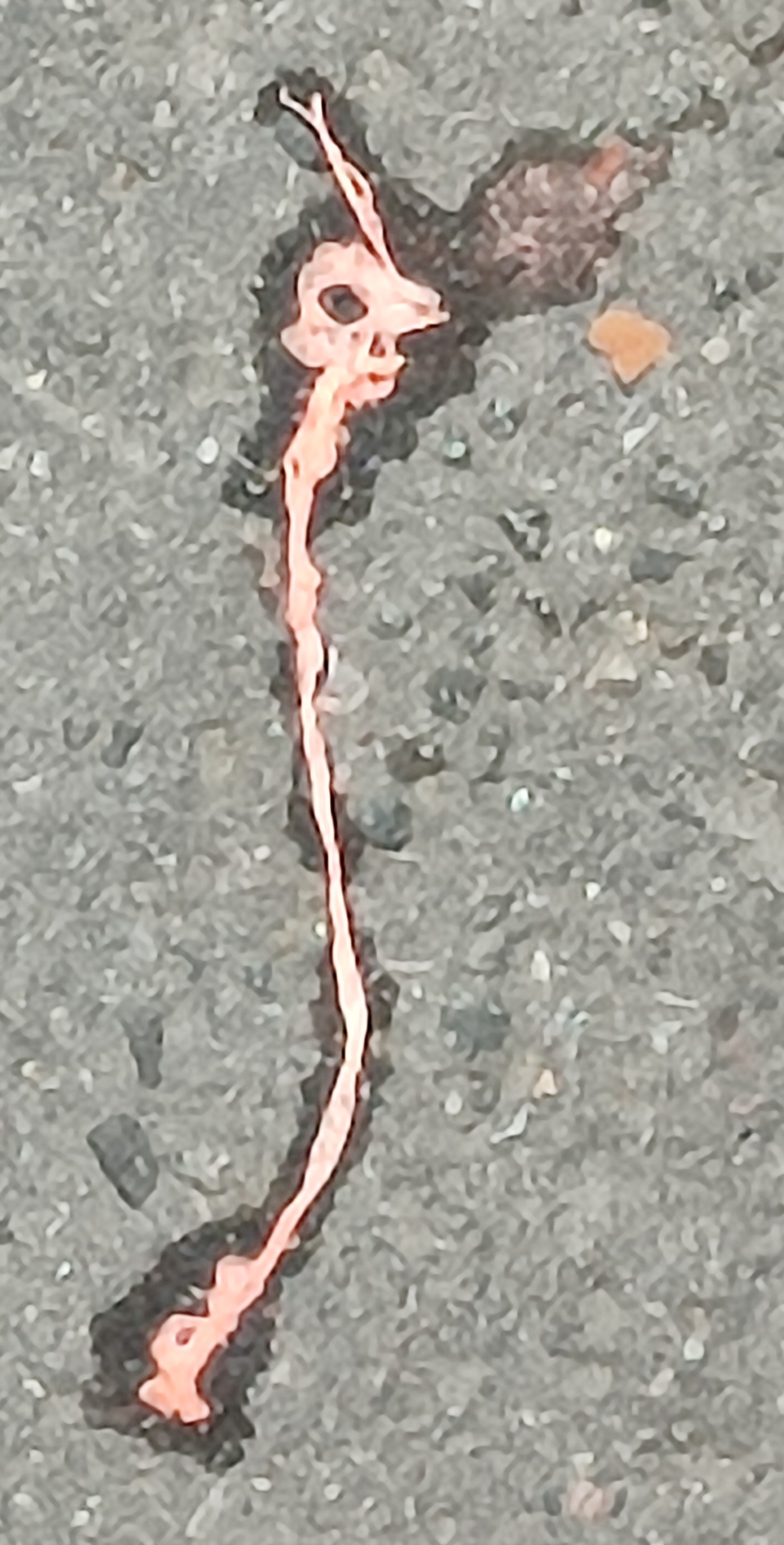
 English followed by une version en français y una versión en español. The subject here was bruited in June, in the post Shorts for June – Ô ce petit déj – Edo, sí, quiero, which included my sort of self-portrait shown, “thumbnail” size, at right.
In 2015 the Zeteo journal published an essay of mine on great portraits in the collection of Harvard’s Fogg museum. These included Renoir’s portrait of Victor Chocquet, David’s Napoleon, and Eakins’s portrait of Alice Kurtz (which may well qualify as a self-portrait).
It may be noted that the present post is a bit of a departure from the, albeit eclectic, Montaigbakhtinian norm. With the post’s many images and off-the-cuff prose, it has seemed appropriate for the dog days of summer here in the northern hemisphere.
And thus this pause to express my sympathy with neighbors in southern Spain, Italy and Eastern Europe who are currently suffering as a result of global warming. As Le monde well editorialized le 5 août:
Déplorer incendies et canicules tout en évitant soigneusement de parler de l’atténuation du changement climatique revient à traiter la fièvre sans s’intéresser à la maladie. L’adaptation est indispensable, mais elle ne doit pas dispenser de poursuivre les efforts de réduction d’émissions. Plus nous tardons à agir sur ce levier, plus l’adaptation sera coûteuse, douloureuse, voire impossible.
Lamenting wildfires and heat waves while carefully avoiding any mention of climate change mitigation is like treating a fever without addressing the underlying illness. Adaptation is essential, but it must not replace ongoing efforts to reduce emissions. The longer we delay taking action on this front, the more costly, painful, and even impossible adaptation will become.
English
Are all portraits self-portraits?
 No, of course not!
Yet I am impressed how, in my own case . . . I am finding odd, much-ignored “beings” on sidewalks, and I have long been creating other odd beings with watercolors or, now, drawing on my computer. And often, it seems, these odd beings are, in fact, or in some sense, self-portraits.
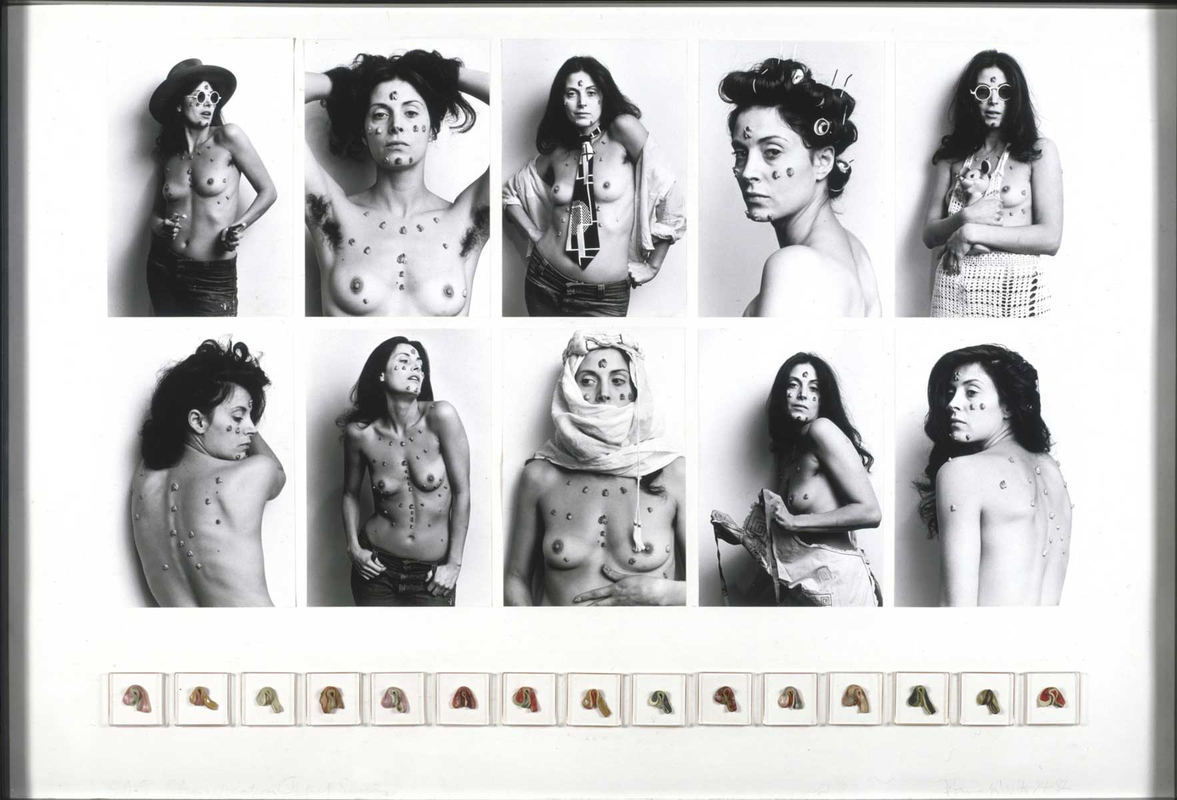
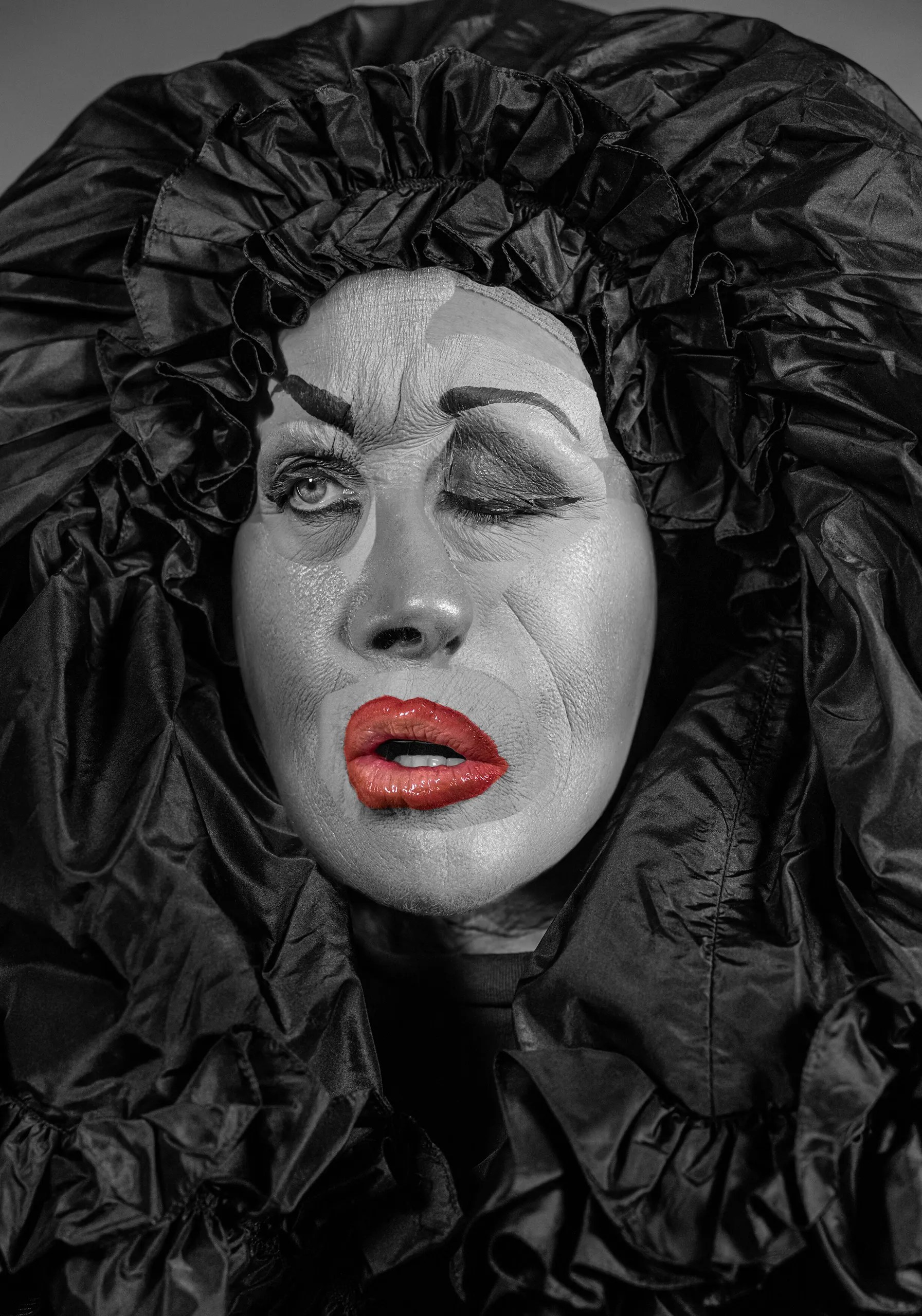
I think of all the women artists of my (Baby Boom) generation and since who have taken themselves for their subject or (Hannah Wilke, Cindy Sherman… ) have used their own bodies as a sort of taking off point. There are, of course, on the male side, Rembrandt’s self-portraits.
Some years ago at the Byrdcliffe arts colony in Woodstock, New York, I met a young woman who was painting a series of nudes, always of herself. I never actually saw any of her paintings, but I imagined her in a studio with big mirrors, first taking off all her clothes and then taking up big brushes soaked with color, overwhelming big canvases with just how naked she was. She was pleased and proud to be selling some of these paintings and for good prices.
And then there’s Picasso. I wonder if he ever thought that certain of his paintings of women were self-portraits? Or how about de Kooning with his series of “Woman” paintings or Bonnard pursuing his model-wife into the bathroom to paint her again and again?
Français
Tous les portraits sont-ils des autoportraits ?
Non, bien sûr que non !
 Et pourtant, je suis frappée de constater que, dans mon cas… je découvre sur les trottoirs des « êtres » étranges et bien souvent ignorés, et que je crée depuis longtemps d’autres êtres étranges à l’aquarelle ou, désormais, en dessinant sur mon ordinateur. Et souvent, il semble que ces êtres étranges soient, en réalité ou d’une certaine manière, des autoportraits.
Je pense à toutes les artistes de ma génération (celle du baby-boom) et des générations suivantes qui se sont mises en scène ou (comme Hannah Wilke, Cindy Sherman…) qui ont utilisé leur propre corps comme une sorte de point de départ. Du côté des hommes, il y a bien sûr les autoportraits de Rembrandt.
Il y a quelques années, à la colonie d’artistes de Byrdcliffe, à Woodstock, dans l’État de New York, j’ai rencontré une jeune femme qui peignait une série de nus, toujours d’elle-même. Je n’ai en réalité jamais vu aucun de ses tableaux, mais je l’imaginais dans un atelier équipé de grands miroirs, se déshabillant d’abord et puis saisissant de gros pinceaux imbibés de peinture, envahissant de grandes toiles de toute sa nudité. Elle était ravie et fière de vendre certains de ces tableaux, et à de bons prix.
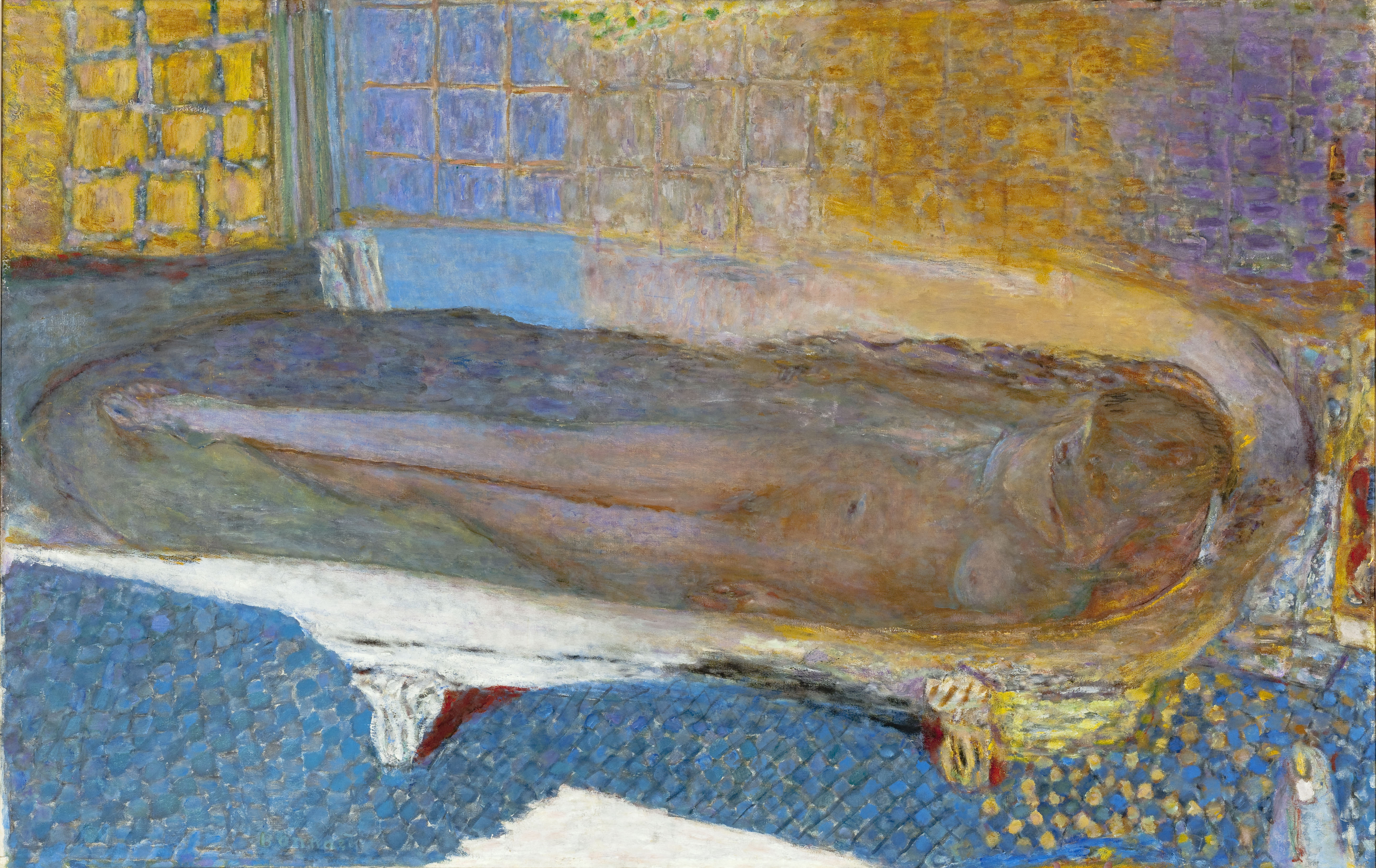
Et puis il y a Picasso. Je me demande s’il n’a jamais pensé que certains de ses tableaux représentant des femmes étaient en réalité des autoportraits ? Ou encore de Kooning, avec sa série de tableaux intitulée « Woman », ou Bonnard, qui suivait son épouse-modèle jusque dans la salle de bains pour la peindre encore et encore ?
Español
¿Son todos los retratos autorretratos?
¡No, claro que no!
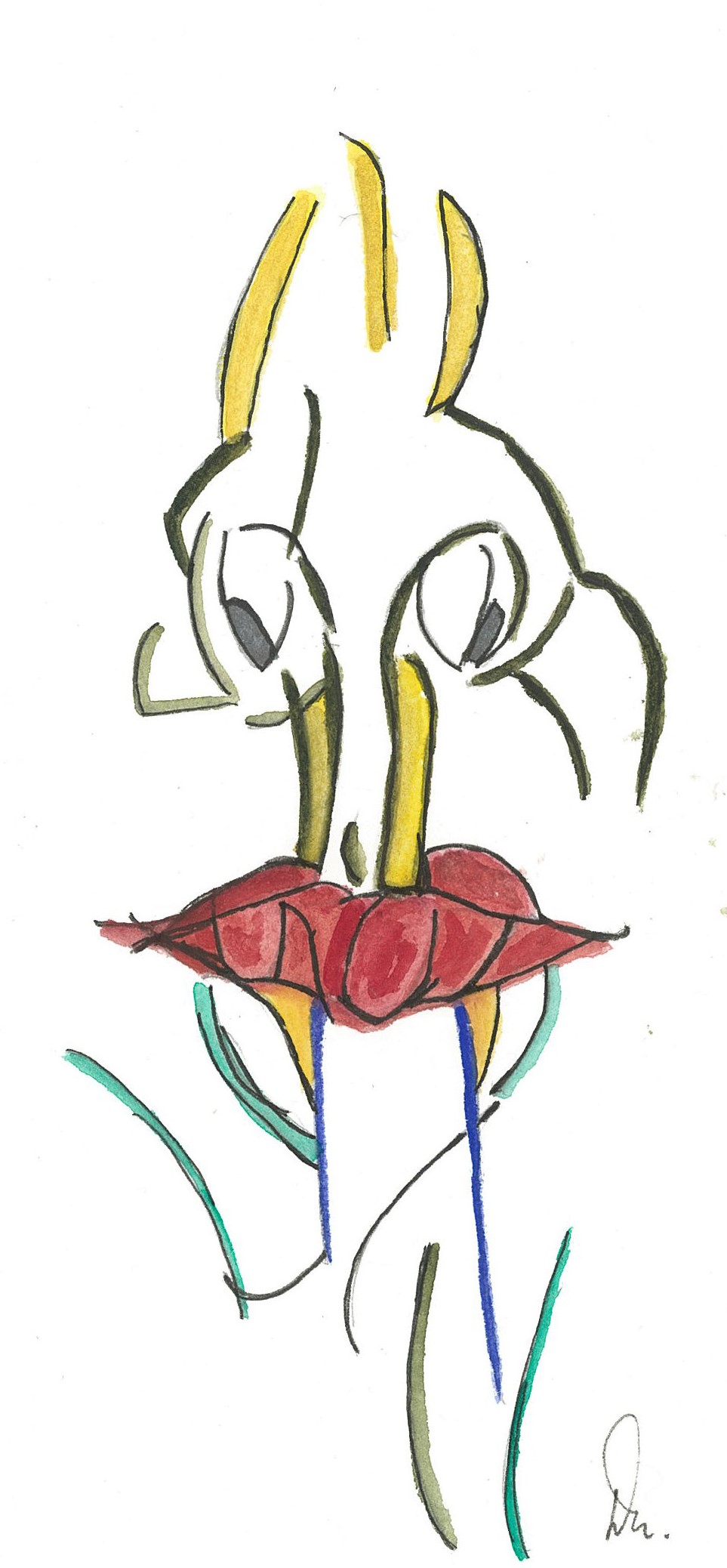 Sin embargo, me sorprende cómo, en mi caso… voy encontrando «seres» extraños y muy ignorados en las aceras, y llevo mucho tiempo creando otros seres extraños con acuarelas o, ahora, dibujando en el ordenador. Y a menudo, al parecer, estos seres extraños son, de hecho, o en cierto sentido, autorretratos.
Pienso en todas las mujeres artistas de mi generación (la del «baby boom») y posteriores que se han tomado a sí mismas como tema, o (Hannah Wilke, Cindy Sherman…) que se han utilizado sus propios cuerpos como una especie de punto de partida. Por el lado masculino están, por supuesto, los autorretratos de Rembrandt.
Hace unos años, en la colonia artística de Byrdcliffe, en Woodstock (Nueva York), conocí a una joven que pintaba una serie de desnudos, siempre de sí misma. En realidad, nunca llegué a ver ninguno de sus cuadros, pero me la imaginaba en un estudio con grandes espejos, primero quitándose la ropa y luego cogiendo grandes pinceles empapados de pintura, inundando enormes lienzos con lo desnuda que estaba. Estaba contenta y orgullosa de estar vendiendo algunos de esos cuadros a buen precio.
 Y luego está Picasso. Me pregunto si alguna vez pensó que algunos de sus cuadros de mujeres eran autorretratos. ¿O quizá De Kooning, con su serie de cuadros titulada «Woman», o Bonnard, que seguía a su esposa-modelo hasta el cuarto de baño para pintarla una y otra vez?
— Text(s) by William Eaton. The “featured image” (or homepage image), is entitled “Abraham.” I created it on my computer by beginning with a rather explicit photograph of a model who went by the pseudonym Astrid. (And many thanks to her!)
The other images in this post are from Rembrandt (Zelfportret, 1629, Alte Pinakothek, Munich); Hannah Wilke (S.O.S. – Starification Object Series, 1974-82);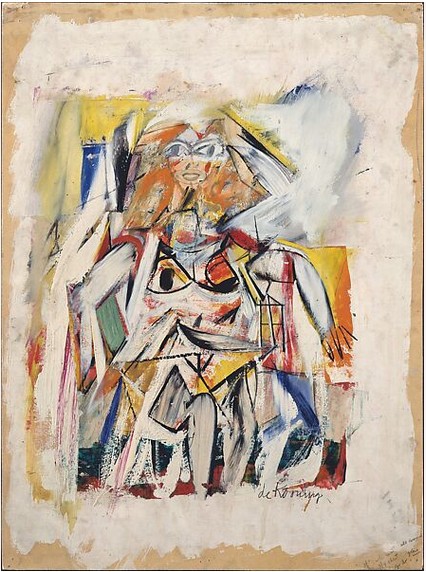 Cindy Sherman (see Cindy Sherman’s Grotesque Digital Creations, by Chris Wiley, The New Yorker, February 20, 2024); Pierre Bonnard (Nu dans le bain, 1936); William Eaton, “Alexander,” 2022; Picasso (La mujer que llora / La Femme qui pleure, 1937, considered a response to the bombing of Guernica, or Gernika, during the Spanish civil war); and Willem de Kooning (Woman, 1952, MET museum) here at right.

