English followed by une version en français y una versión en español. There is also, in English, A brief note as regards the future of Paris and, perhaps, other European cities.
After I had worked happily developing this poem, or these poems, I found myself feeling sensitive regarding the comfort in which I live while others have been much less fortunate. And, yes, as with most everyone else in my fortunate position, luck (to include genetic luck) has been my principal good quality. Among other things, as regards luck, there is a kind of randomness to the locations of the extreme weather events and related fires with which all of us around the world are now plagued, through plenty of fault of our own.
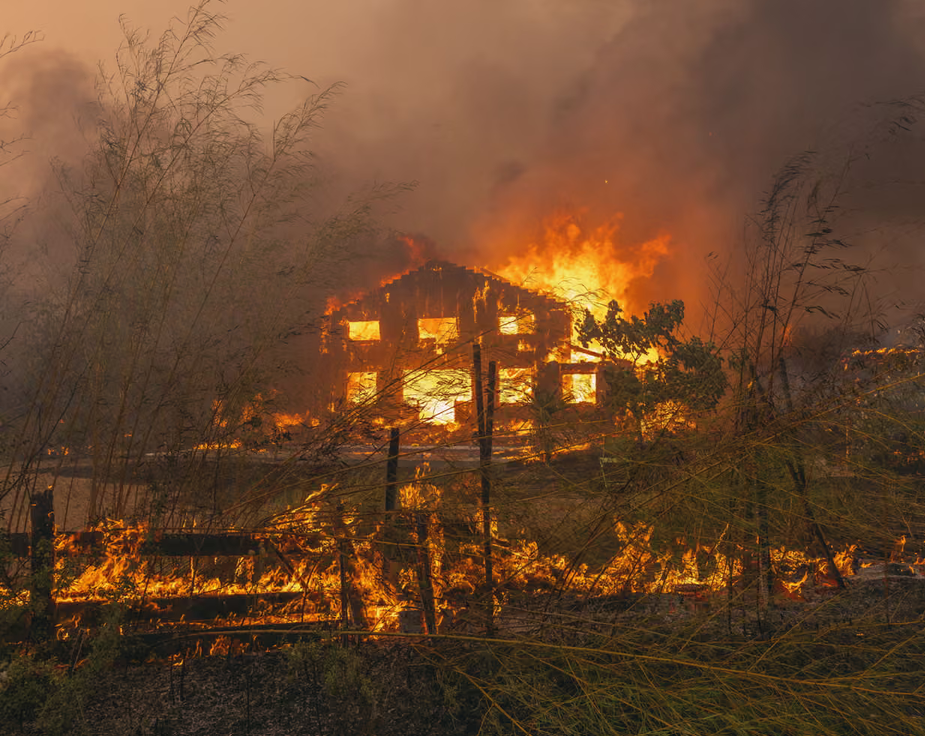 And, yes, too, I am dismayed by and ashamed of the greed of the post-World-War-Two generations—by our ongoing greed—which has not only eliminated so many species but is leaving our children and grandchildren with such a level of environmental devastation. For their sake, might we begin to heed the warnings of our scientists and public-health leaders, and the evidence of our own eyes and lungs?
As a French urban-planner and a climate engineer observed in Le monde in August 2026:
A présent, notre responsabilité vis-à-vis des enfants et des jeunes adultes est immense. Ce sont elles et eux qui affronteront les pics de chaleur à 50 C en 2050.
(We now have an enormous responsibility to look out for our children and young adults who in 2050 will be facing heat waves that touch 50°C.)
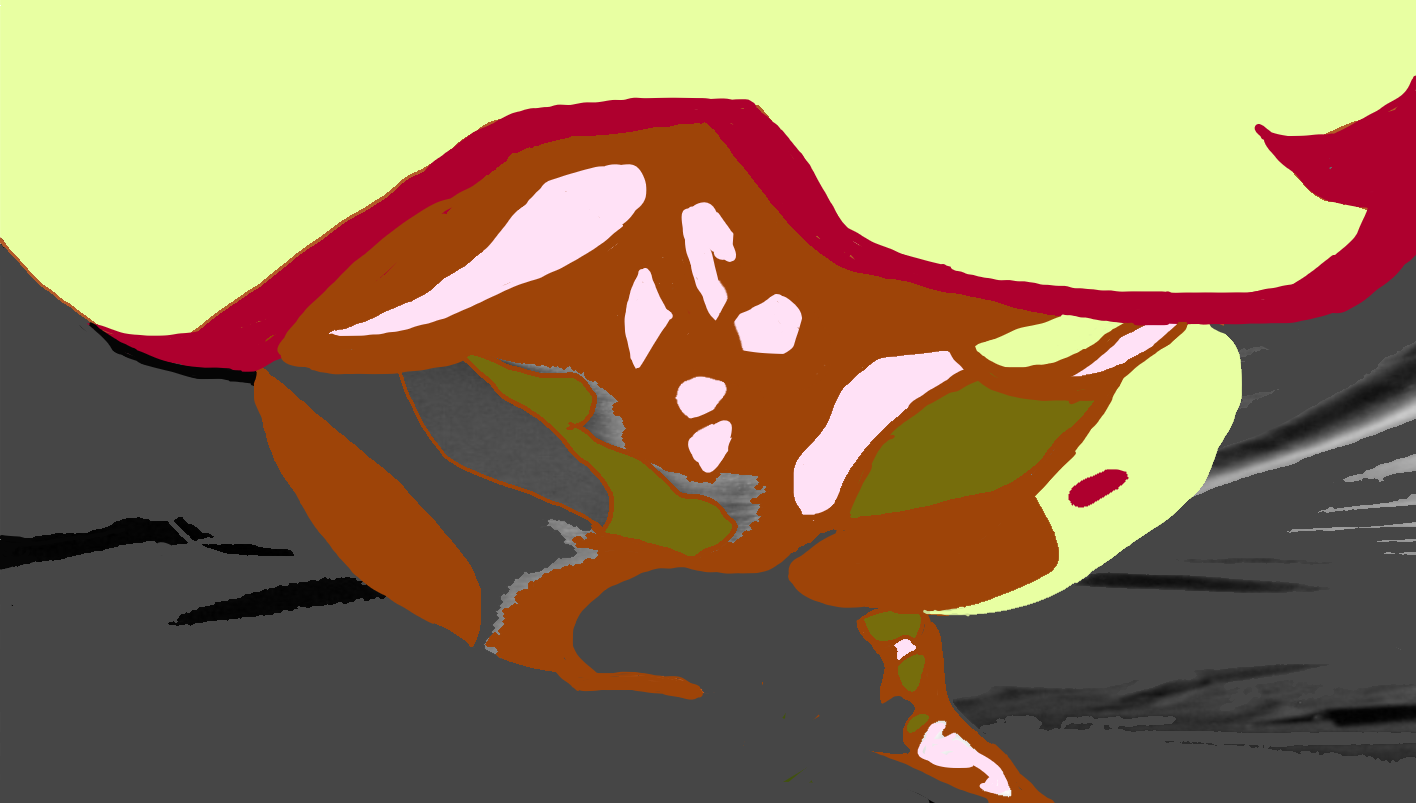
In addition, some may say, à juste titre, that the artwork here has little to do either with such subjects or with the poem(s) that here follow, but . . . It was made without my glasses and certainly as a result, if not of the heat and the various other environmental and political catastrophes now upon us, than of my admiration for Dr. Seuss.
English
The summer of 2026, age 71 and sheltered at least: a sonnet
Were it mine to choose whether my reading glasses I left
Somewhere on my dining table or in the little town office
Where I spent an enjoyable half hour discussing heat pumps
With a young official, and also examining her computerized maps . . .
But still, if afterwards my glasses I forgot to pack,
And so tomorrow I’ll have to return, hoping, and certainly
With confidence that the young woman or one of her colleagues
Has put my glasses aside, or that where I left them they remain . . .
But again, my preference would be that when home again I arrive –
And feel the cool of my apartment with all its shutters closed
To block the sun and heat, and thus the light a relaxing dim –
Somewhere twixt the power cords, papers and pills, there’ll they’ll be . . .
But if, at worst, for new reading glasses I must pay,
For that, too, I’m prepared this too-warm summer day.
Français
L’été 2026, à 71 ans et au moins à l’abri : un sonnet
Si j’avais pu choisir si mes lunettes de lecture je les avais laissées
Quelque part sur ma table à manger ou dans le petit bureau municipal
Où j’ai passé une demi-heure agréable à discuter de pompes à chaleur
Avec une jeune fonctionnaire, et aussi à examiner ses cartes informatisées…
Mais tout de même, si par la suite de mettre mes lunettes dans mon sac j’ai oublié,
Et que je doive donc y retourner demain, en espérant, et bien sûr
Avec la confiance que la jeune femme ou l’un de ses collègues a mis mes lunettes
De côté, ou qu’elles se trouvent encore là où je les ai laissées…
Mais encore une fois, je préférerais qu’à mon retour chez moi –
Lorsque je sentirai la fraîcheur de mon appartement, tous volets fermés
Pour réduire la chaleur, et ainsi profiter d’une lumière apaisante et tamisée –
Quelque part, entre des cordons d’alimentation, papiers, comprimés, ils y seront…
Mais si, dans le pire des cas, je dois de nouvelles lunettes de lecture acheter,
À cela aussi, en cette trop chaude journée d’été, je suis préparé.
Español
El verano de 2026, a los 71 años y al menos a salvo: un soneto
Si pudiera elegir si dejé mis gafas de lectura por algún lado
de mi mesa del comedor o en la pequeña oficina municipal
donde pasé una agradable media hora hablando de bombas de calor
con una joven funcionaria, y también examinando sus mapas digitalizados…
Pero, aun así, si después me olvidé de meterme las gafas en mi mochila,
y por eso mañana tendré que volver, con la esperanza y, por supuesto,
con la confianza de que la joven o alguno de sus compañeros
haya guardado mis gafas, o de que sigan estando donde las dejé…
Pero, una vez más, preferiría que, al llegar de nuevo a casa,
y sienta el frescor de mi piso con todas las contraventanas cerradas
para reducir el calor y así disfrutar de una luz tenue y relajante,
quizás, entre los cables de alimentación, papeles, pastillas, estarán…
Pero si, en el peor de los casos, tengo que por unas gafas nuevas pagar,
para eso también, en este muy caluroso día de verano, estoy preparado.
— Poem(s) and artwork by William Eaton. The photograph of the house on fire near to the Arcachon Basin in France was taken by Clement Viala.
A brief note as regards the future of Paris and, perhaps, other European cities
I am sure there are urban planners and engineers way ahead of me in this regard, but the summer of 2026 has made it clear that the apartment buildings of Paris need to be overhauled so as to be cooler during the hotter months. Ideally this modernization would also limit the need for air-conditioning or, at the very least, reduce the possibility that the air conditioning of the few makes life worse for the many. To say nothing of the need to avoid any further contributions to global warming.
In this regard Paris has perhaps this advantage: its history. That is, in the nineteenth century it became apparent that a similarly ambitious overhaul of its infrastructure was necessary, and this was carried out with a good deal of success ((and with yet greater renown) under the leadership of Baron Haussmann. As is well known, the Haussmann plan called for improving the city’s traffic circulation by building new boulevards; improving the city’s health by building a new water distribution system and sewers; and creating green spaces and recreation for Paris’ rapidly growing population. It has been said that one in five streets in central Paris were Haussmann’s creation, as were four major parks: le Bois de Boulogne, le Bois de Vincennes, le Parc des Buttes Chaumont, and le Parc Montsouris.
So far, under Socialiste leadership, Paris has been planting trees, privileging bicycling and walking over automobile use, and cleaning la Seine so that people can swim in it. All this has been to the good, but now much more is needed.
For my somewhat tongue-in-cheek recommendations for improving the environment of l’île de Ré, see Even the Brinks truck… Par exemple, à l’île de Ré… él tiene que convertirse en bici Brinks.

